Beau-Rivage Eco-Redesign
A ground-up eco-redesign of the Beau-Rivage Palace website that cut its weight and carbon by roughly 95% while keeping the feel of a five-star hotel. An audit of the existing site, a fresh design, and a Nuxt 3 build tuned for sustainability.
- Role
- Eco-design & build
- Year
- 2025
- Host
- HEIG-VD · Eco-conception
- Scope
- Team of four
- Shipped
- Redesign + Nuxt 3 build
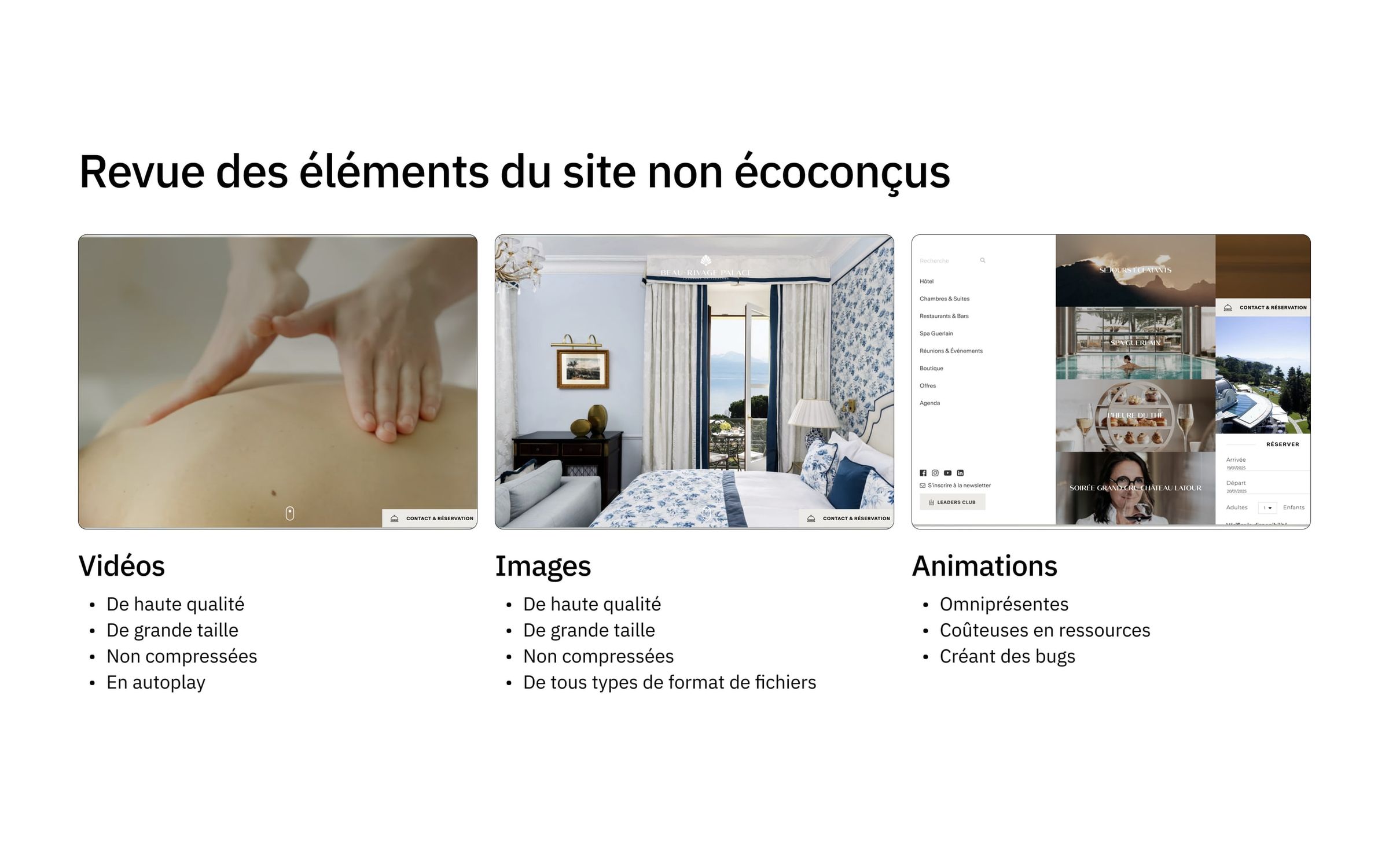
Luxury hotel websites are some of the heaviest on the web: autoplay video, enormous images, and every format imaginable, all in the name of prestige. That weight is not free. It is bandwidth, energy, and carbon on every single visit.
The brief was to redesign the Beau-Rivage Palace website under eco-conception (responsible digital design) principles, and the real challenge was the tension inside it: cut the site's environmental cost dramatically without losing the sense of luxury that is the whole point of the brand.
- The technical build: the move to Nuxt 3, server-side rendering, and the image-optimization pipeline
- The before-and-after measurement of weight, carbon, and performance
- The audit of the existing site and the redesign, with the team
- Parts of the visual design and the mockups, shared within the team of four
Team of four (Group CJJN) for the Eco-conception module at HEIG-VD: Nicolas Aerny, Joël Gaillard, Jérémy Martin, and Clément Künzi. Taught by Stéphane Lecorney.
Weighing the existing site
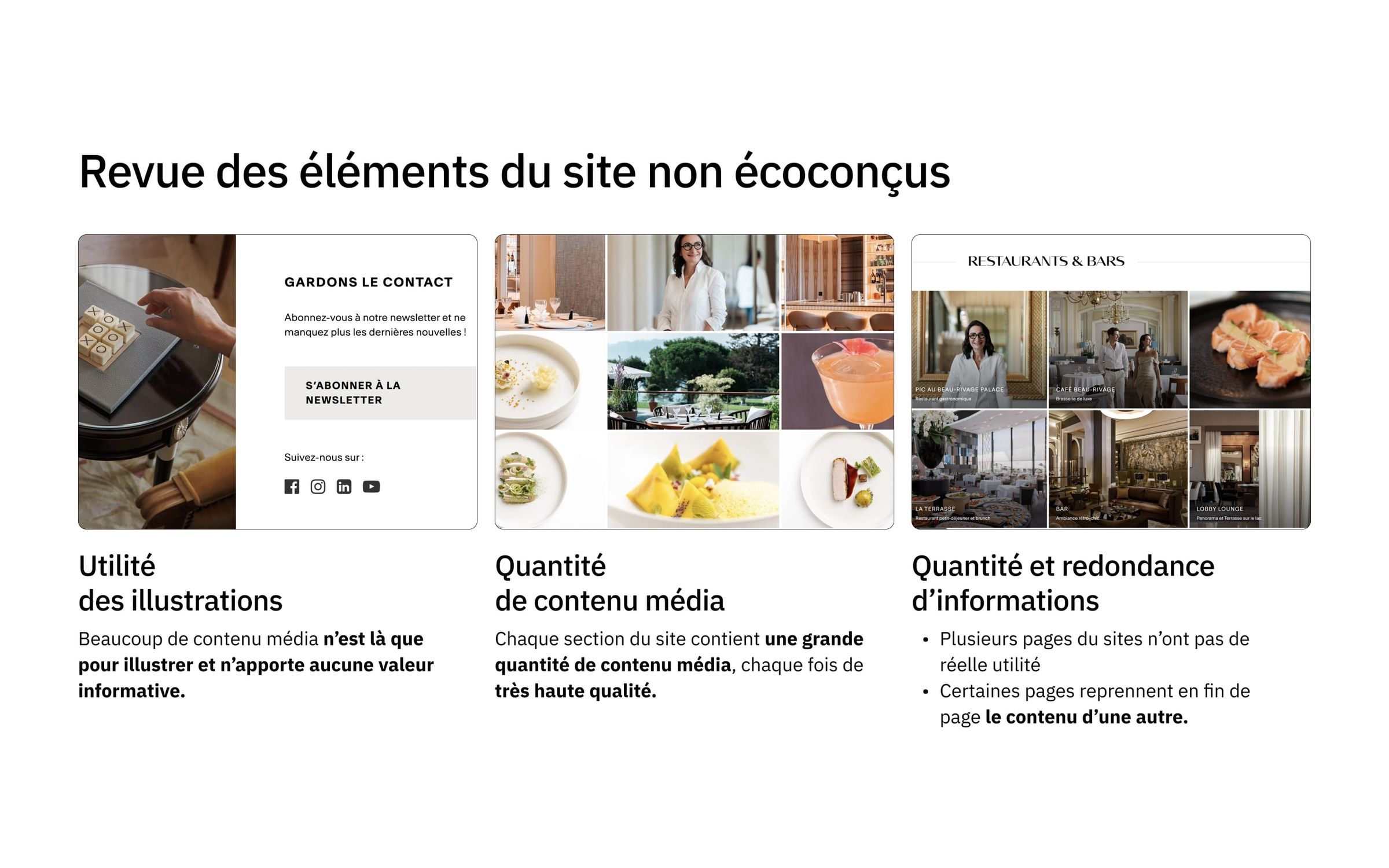
Before redesigning anything we measured what was there, because eco-conception only means something against a baseline. The existing site leaned on autoplay video and unoptimized images across a deep structure of rooms, suites, restaurants, bars, and spas. A single page weighed more than thirteen megabytes and scored an F on EcoIndex, with an estimated 368 kg of CO2 a year at ten thousand visits a month.
We also mapped the real user journeys (a prospect informing themselves, a guest comparing rooms) so the redesign could keep what people actually came for while shedding the weight they never asked for.
Luxury without the weight
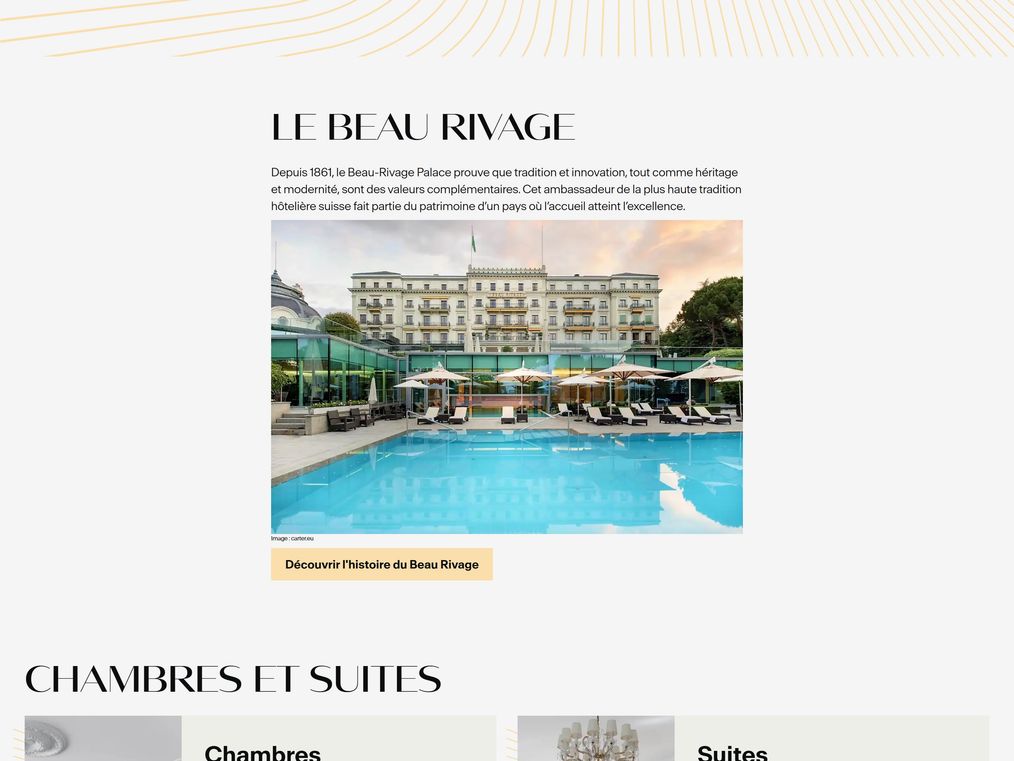
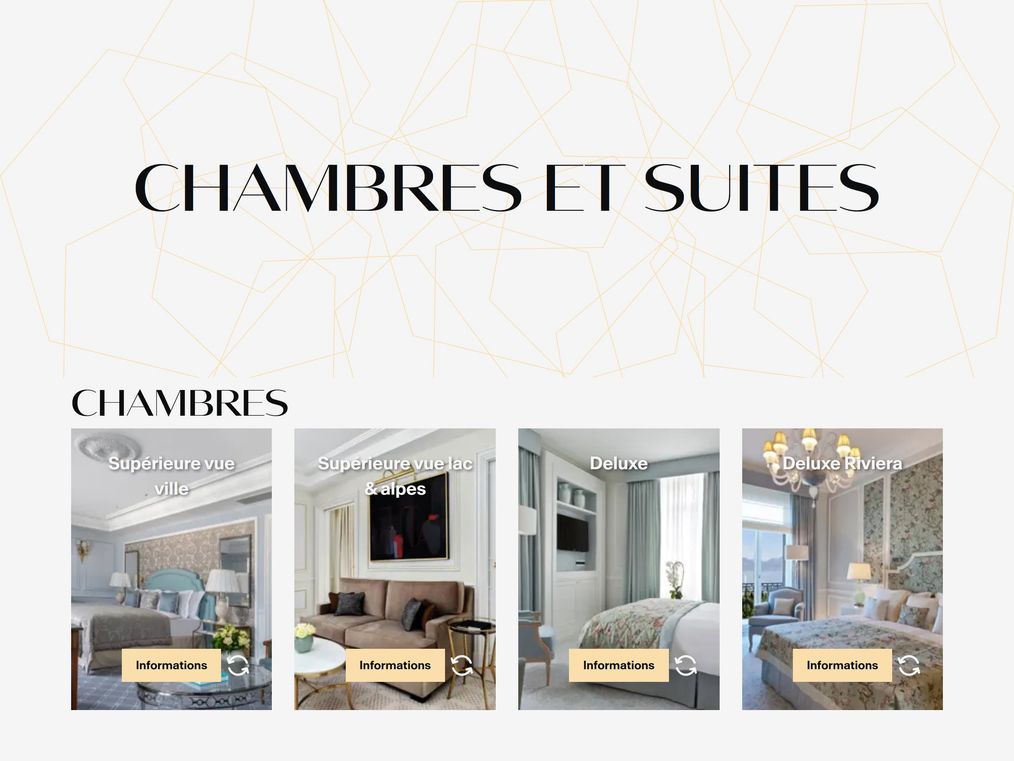
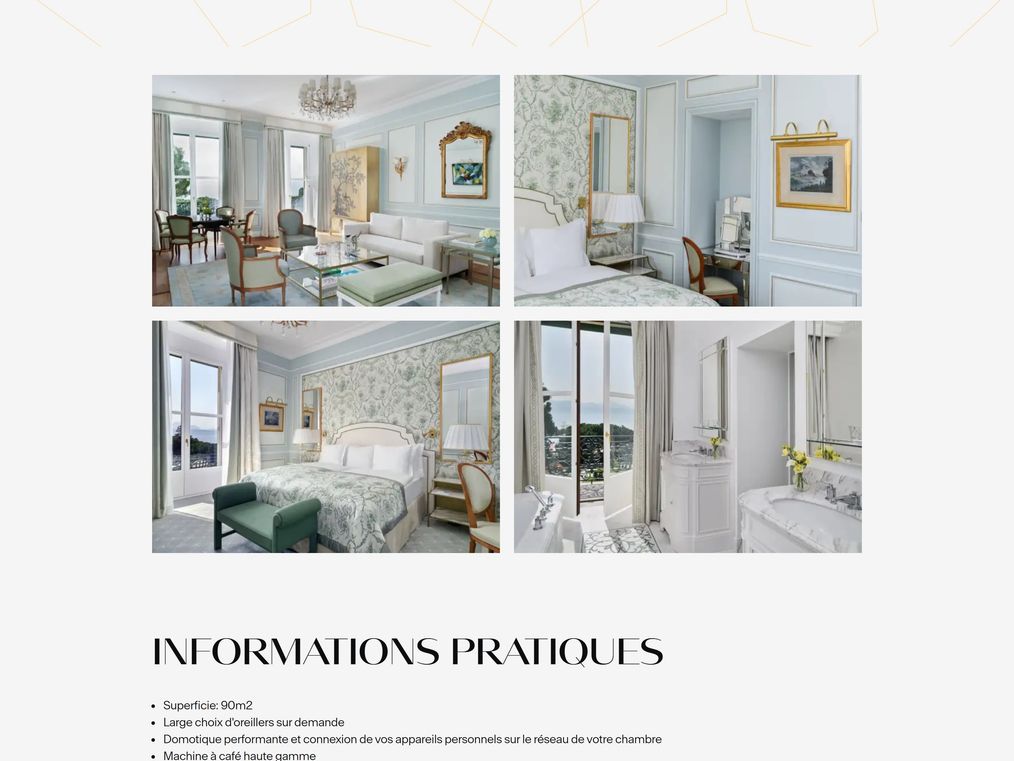
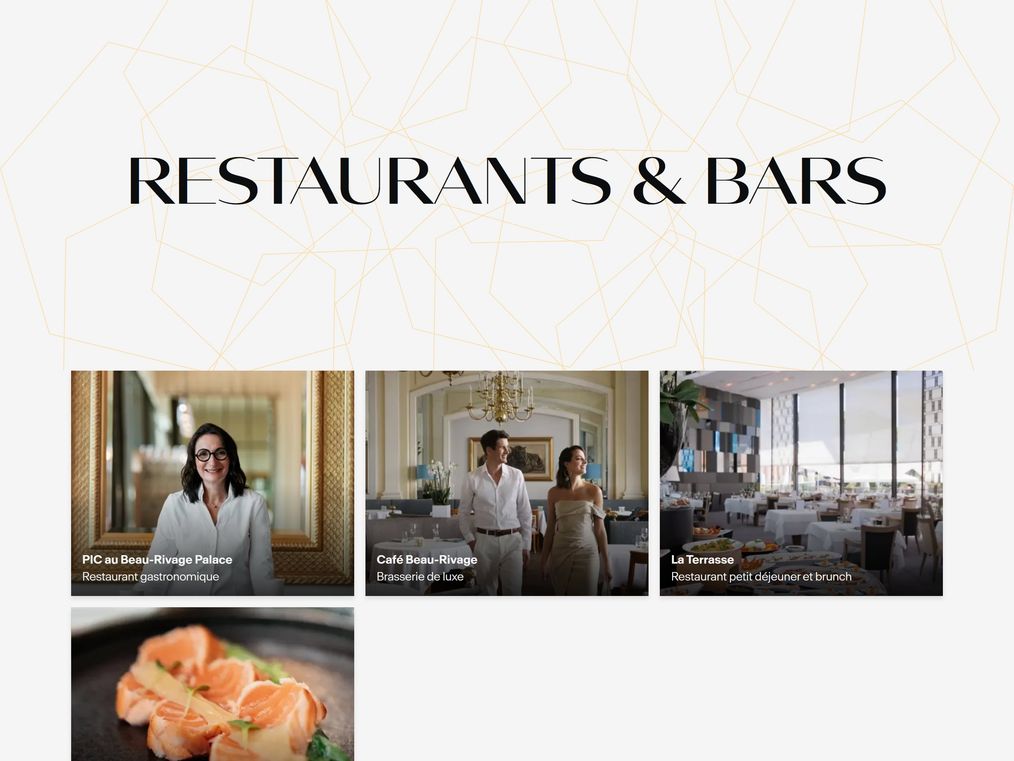
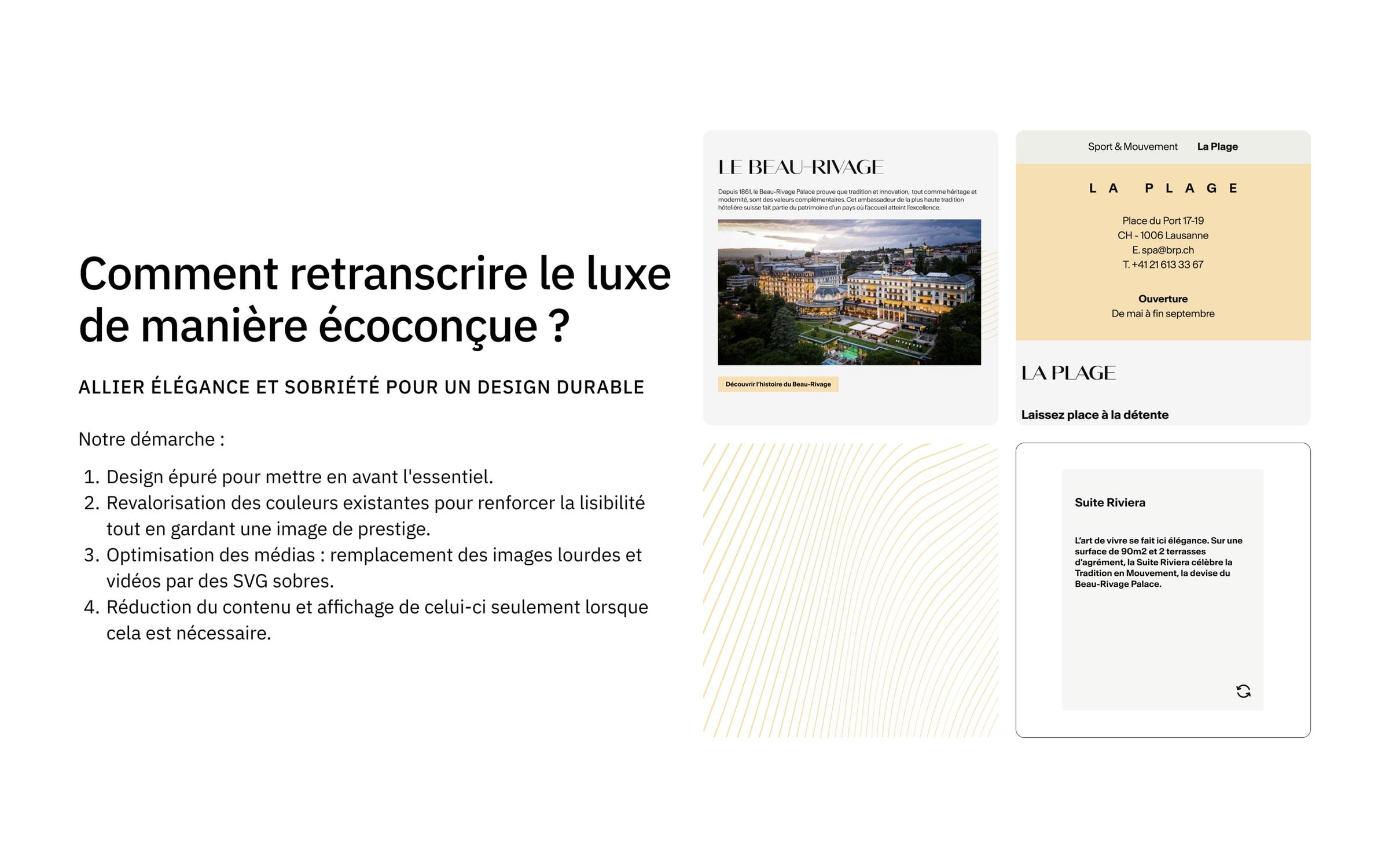
The design question was the interesting one: how do you keep an image of prestige while removing the heavy ingredients that usually signal it? We rebuilt the key pages (the homepage, the rooms and suites, a suite like the Riviera) around restraint, treating generous space and careful typography as the luxury signal instead of autoplay spectacle.
Nuxt 3, SSR, and image discipline
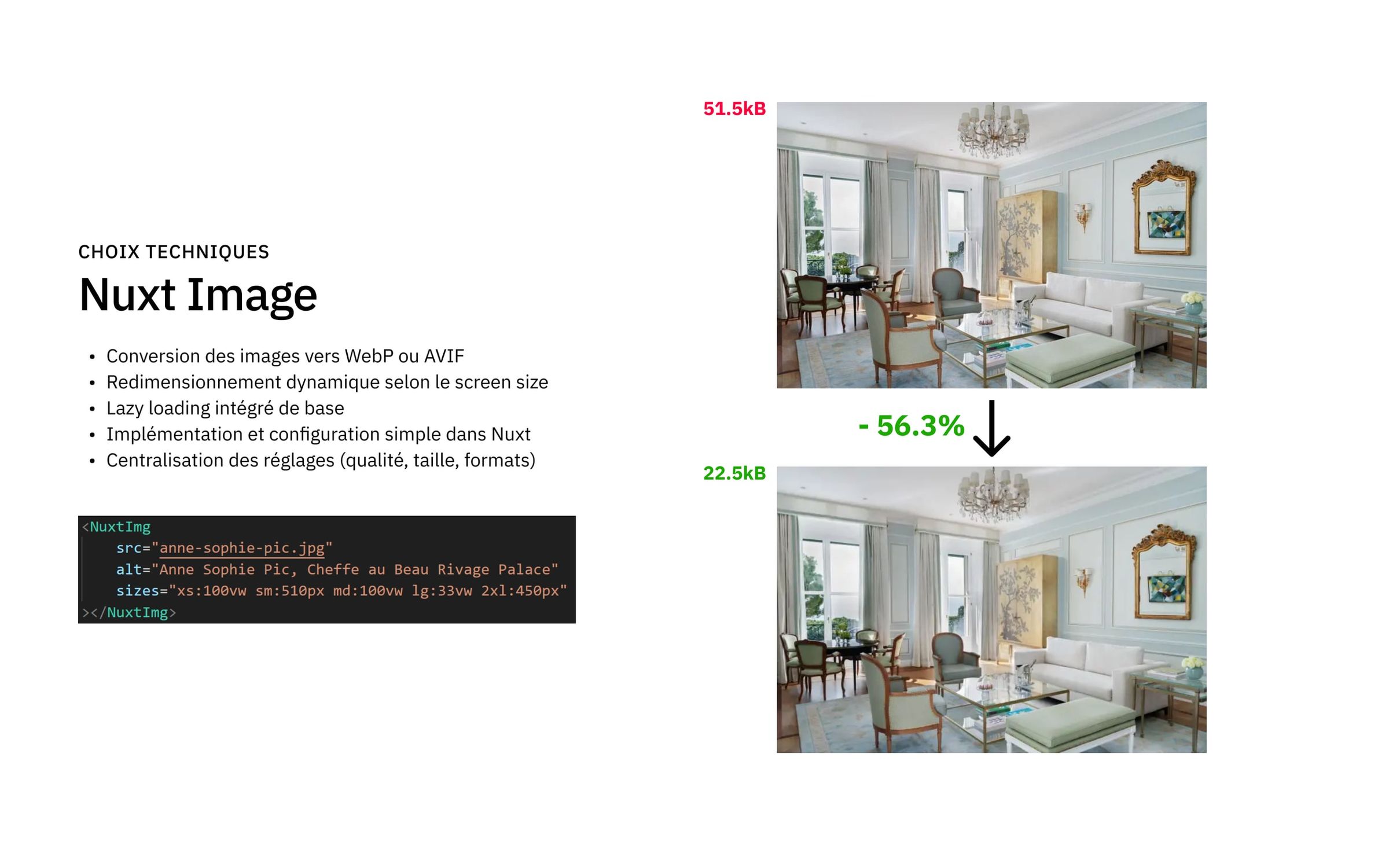
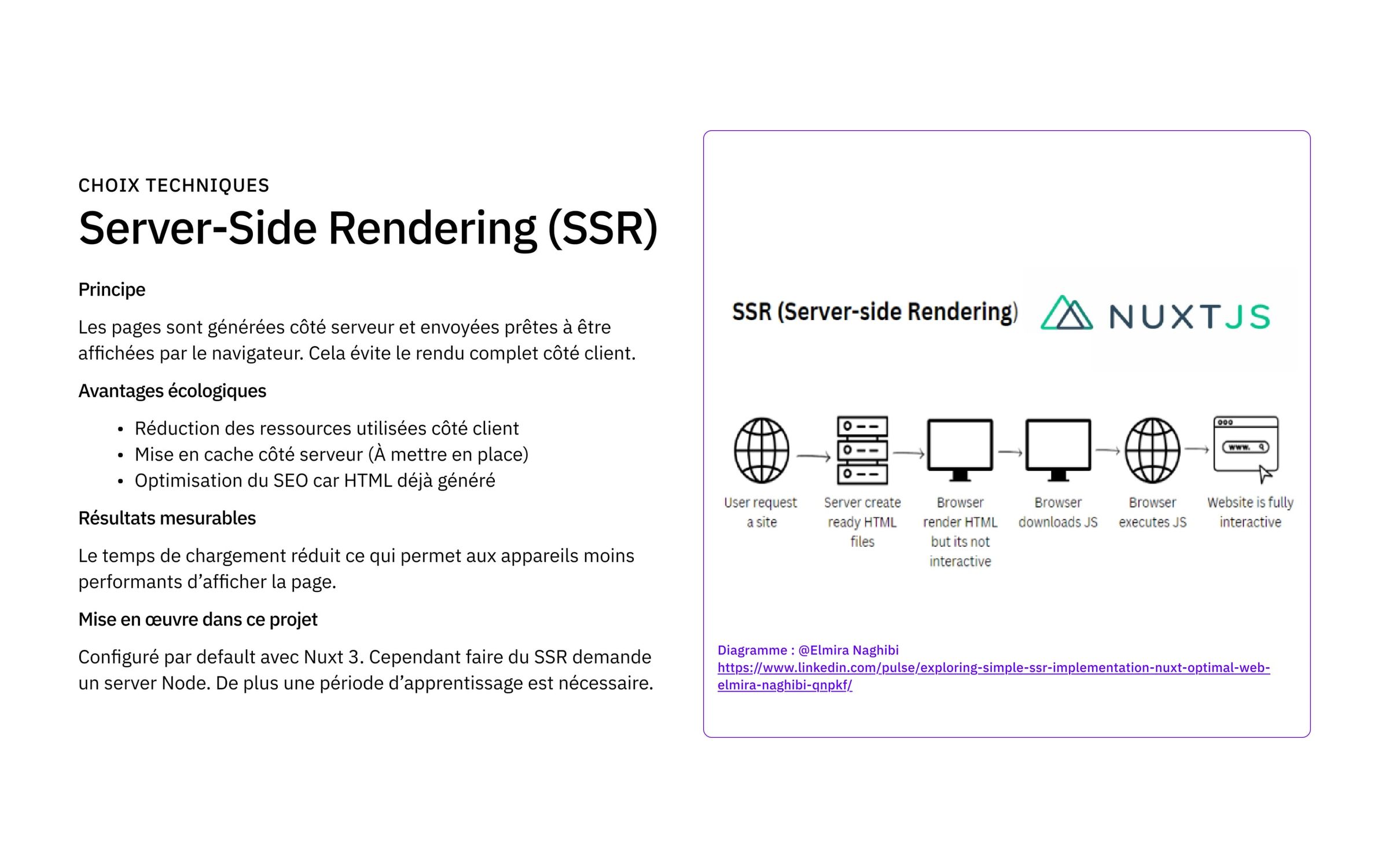
We started from Vue, the framework we knew, and moved to Nuxt 3 specifically for the sustainability tools it brings. Server-side rendering means the page arrives ready to display with minimal work on the visitor's device, and Nuxt Image handles the single biggest source of weight automatically: converting images to modern formats like WebP and AVIF, lazy-loading them, and resizing them to the actual screen rather than shipping one huge file to everyone.
That combination is most of the win. An SSR architecture on Node.js keeps client-side work and therefore device energy low, and disciplined image handling turns the heaviest pages into the lightest. The point throughout was that sustainability here is not a vibe, it is specific technical choices with measurable effects.
Looking for green, honestly
We also looked at where the site would live, checking hosts against the Green Web Foundation's dataset. The honest finding was a gray area: our platform runs on AWS infrastructure in Europe, which claims renewable energy but is not cleanly listed as green. Rather than overclaim, we noted it as a real limit, because an eco-conception project that fudges its own hosting is not being honest about its footprint.
From F to A
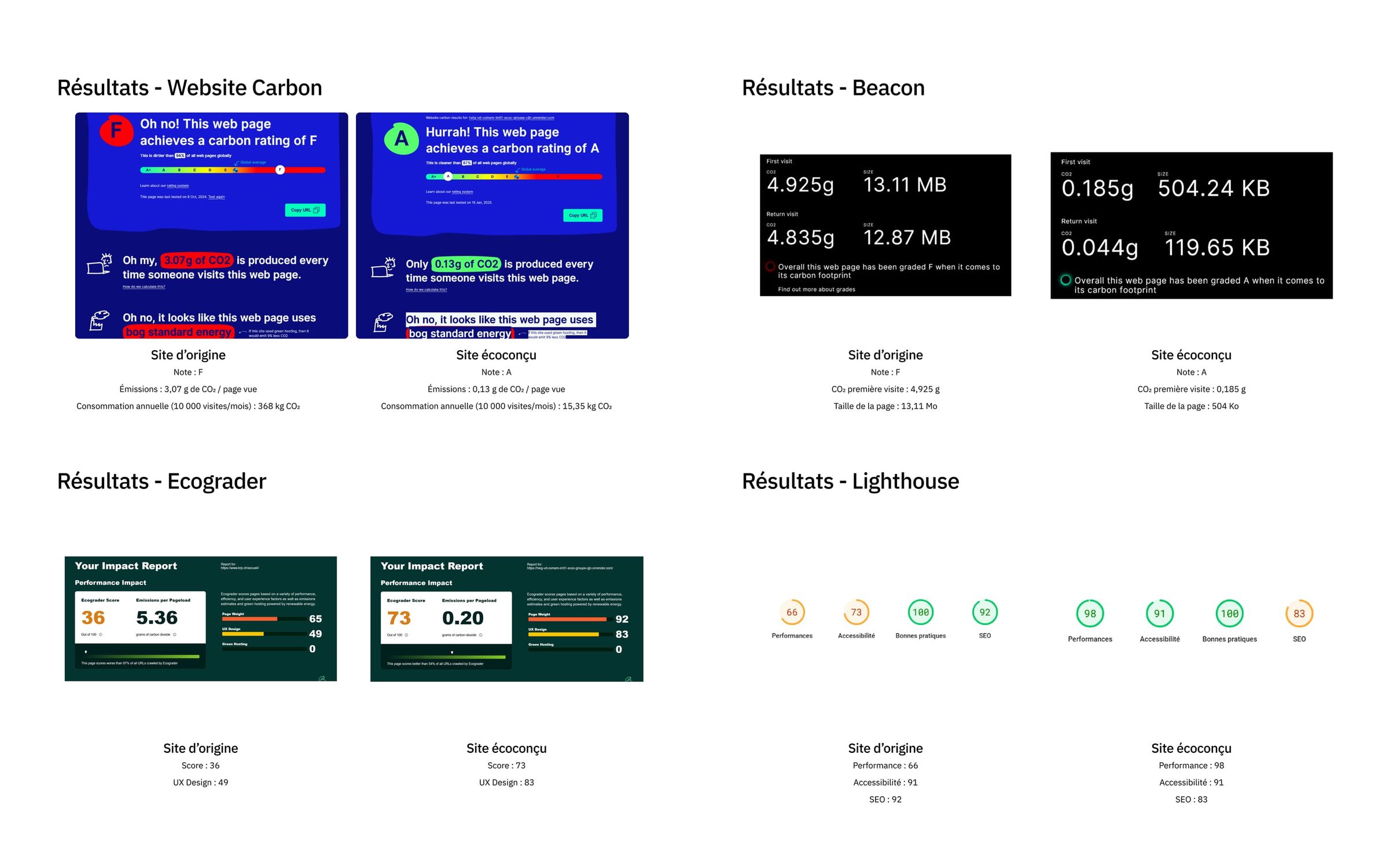
The before-and-after is the part I am proudest of, because it is measured, not asserted. Page weight dropped from 13.11 MB to 504 KB. Estimated annual carbon fell from 368 kg to 15.35 kg of CO2. The EcoIndex grade went from F to A, and the overall quality score rose from 36 to 73, with performance climbing from 66 to 98.
That is roughly a 95% reduction in weight and carbon, a site about twenty times lighter, with usability and performance going up rather than down. The luxury survived the diet.
A redesigned Beau-Rivage Palace site that is roughly 95% lighter in weight and carbon than the original, EcoIndex F to A, while keeping the feel of a five-star brand.
A Nuxt 3 build using server-side rendering and automatic image optimization as the main levers, with a measured before-and-after rather than a claim.
An honest account of the limits, including the gray area around green hosting, because an eco-conception project has to measure its own footprint truthfully.
This project made digital sustainability concrete for me. It is easy to talk about responsible design in the abstract; it is much more useful to cut a real site's carbon by 95% and be able to show the numbers. The lesson that stuck is that the heaviest, most wasteful parts of a site are usually the most automatable to fix, images above all, and that you can be lighter and faster and still feel expensive. It sits close to the question behind my thesis: making the invisible energy cost of the digital visible, and then doing something about it.