Wama
A quiet machine-learning companion that lives beside the sink. Wama senses your presence and the running tap with a trained vision model, reads a simple hand gesture, and answers through an animated character, treating ML as a witness rather than an optimizer.
- Role
- Integration & development
- Year
- 2026
- Host
- SUPSI · ID131
- Scope
- Team of three
- Shipped
- Working PWA prototype
Dishwashing sits at a strange threshold. It is physical enough to keep you in the room, but automatic enough to leave your mind somewhere else entirely. That gap, between bodily presence and mental absence, is the territory Wama was built for.
The question was deliberately not how to make the task more efficient. It was whether that drift could be acknowledged, even held, by something in the environment. Wama is closer to a ritual object that happens to use a camera than to a productivity tool.
The course, Intelligence as a Material, framed the real provocation: an ML system can act as a witness rather than an optimizer. It can notice without demanding resolution. That reframing, and the ethical line it runs straight into (presence-sensing at home can drift into surveillance), is the design problem at the heart of the project.
- Integrating the team's parts into one working app: the interface and character from one teammate, the local ML detection from another
- Restructuring and cleaning the largely AI-generated code into a professional, maintainable build
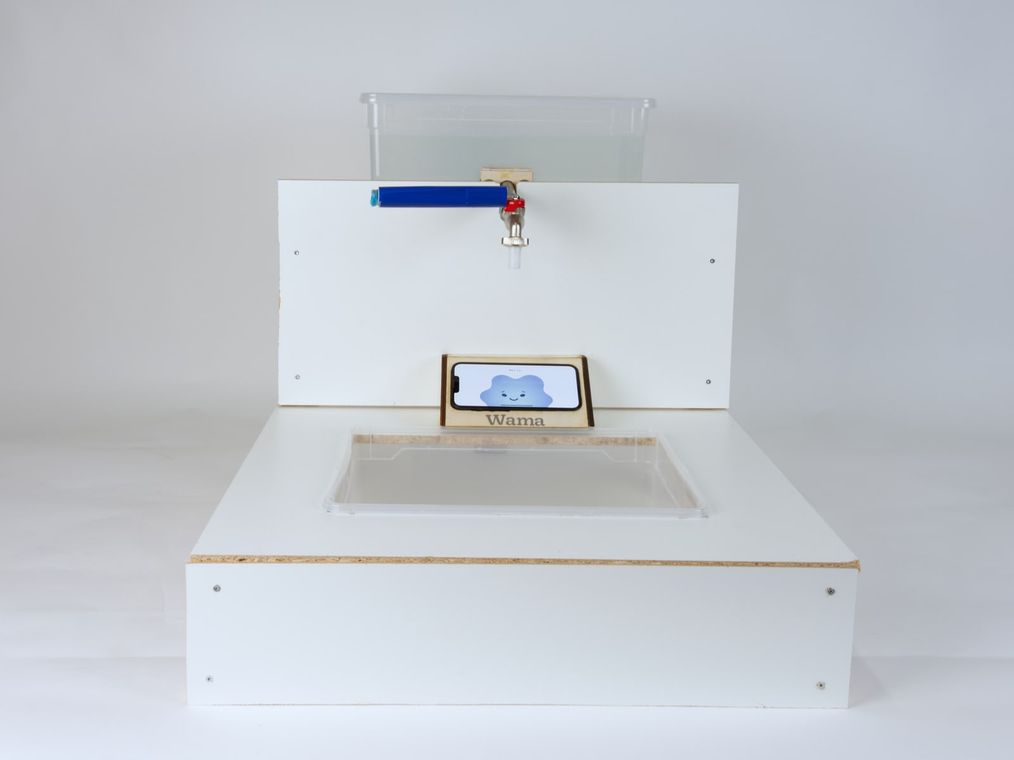
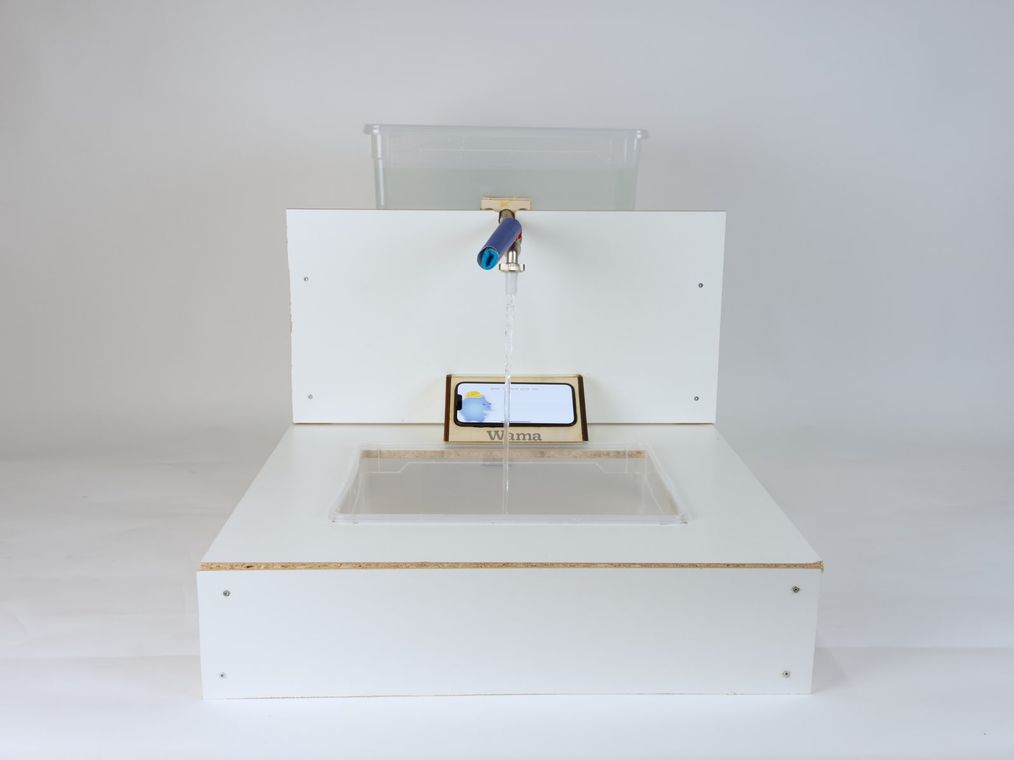
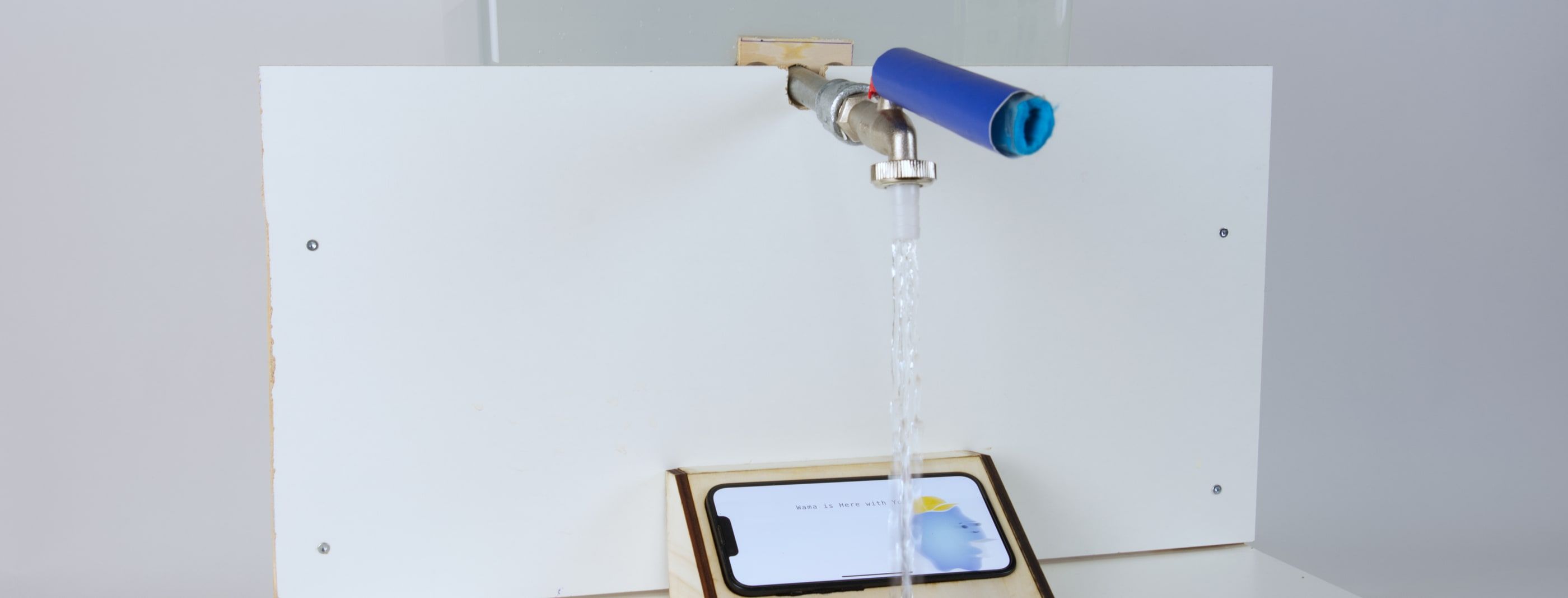
- Building the physical sink prop used for testing and the final demo
- Concept and ideation with the team
- The character design and animation (Jennifer Lee)
- The MediaPipe and Teachable Machine detection code (Annabelle Conron)
Team of three (Jennifer Lee, Annabelle Conron, Jérémy Martin) for ID131 Intelligence as a Material at SUPSI, taught by Matteo Loglio.
A witness, not an optimizer
Most ML in the home is sold as optimization: do the task faster, track the metric, close the loop. Wama refuses that register. Drawing on ambiguous loss theory, the idea that attention can exist without clear resolution, the character was given a disposition that notices but never instructs. It holds a register rather than issuing a correction.
That single decision shaped everything. There is no water meter, no counter, no gamification. Environmental concern is expressed through the character's worried affect when the tap runs unattended, which keeps the whole experience in the register of feeling rather than accounting.
Reading the sink, on the device
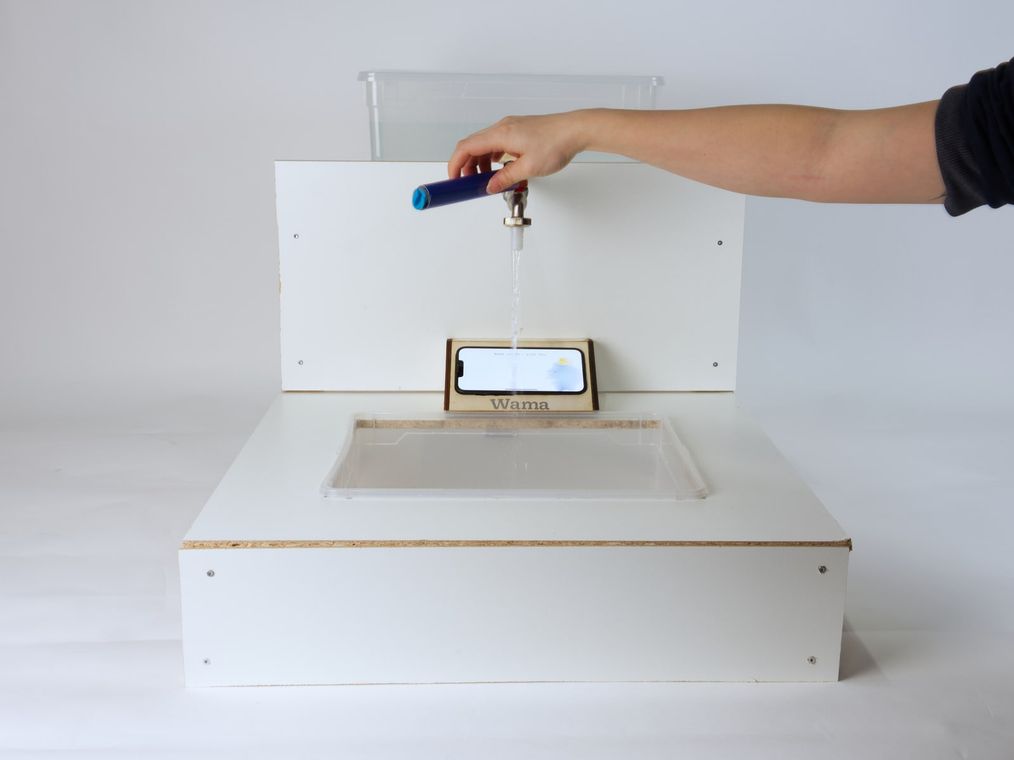
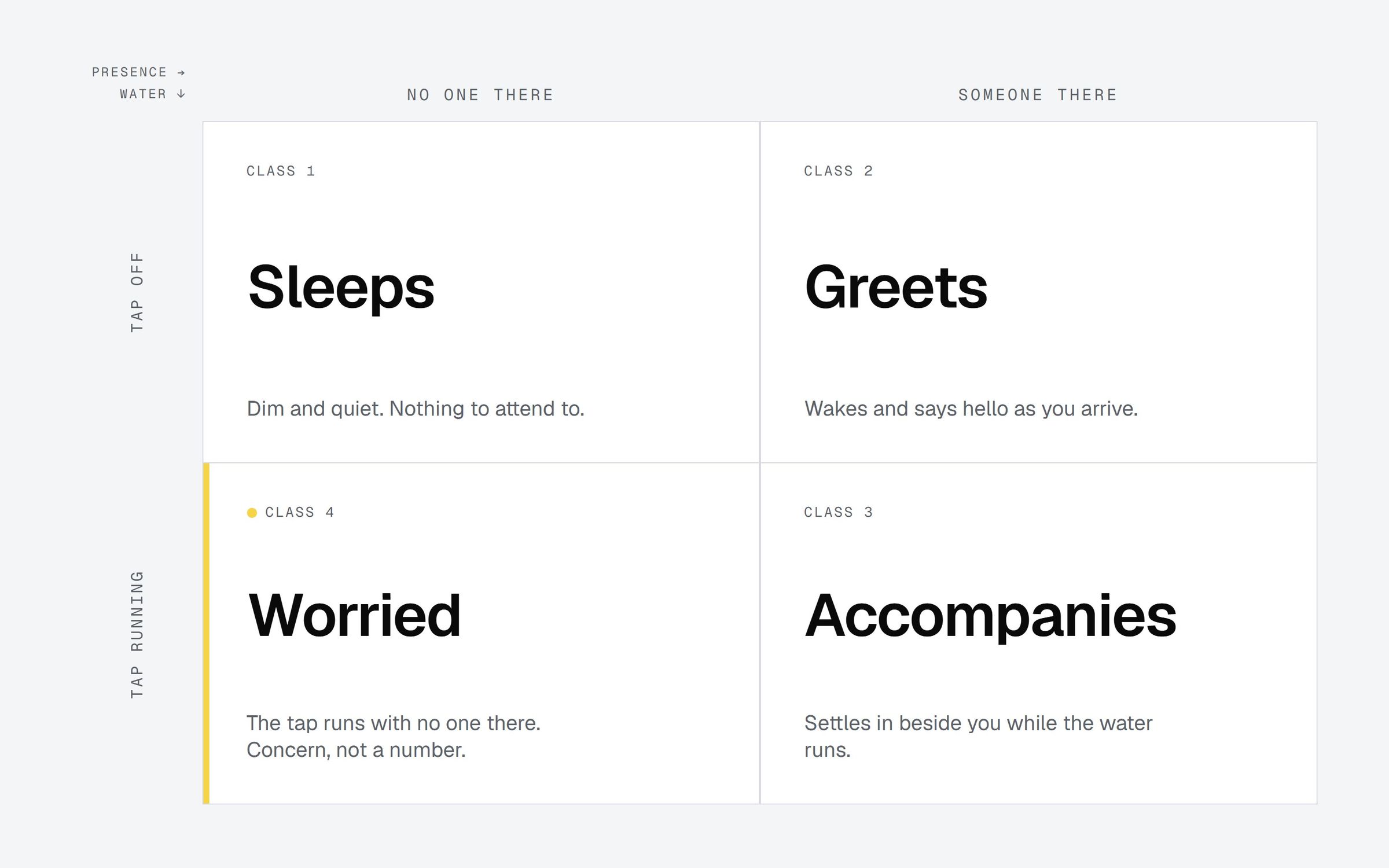
Wama reads the scene from a small vision model trained on four situations: nobody there, a person arrives, the water runs with someone present, and the water runs with nobody there. A hand-tracking model adds one gesture, thumbs up or down held for half a second, because hands at a sink are wet and busy. That is the whole input.
What matters as much as the sensing is where it happens. Everything runs locally, in the browser on the phone, with no server and nothing uploaded. That single architectural choice is the project's ethical position made concrete. A device can watch your kitchen sink only because what it sees never leaves the room. Presence-sensing at home is one short step from surveillance, and keeping the model on the device is how Wama refuses to take that step.
A character, not a dashboard
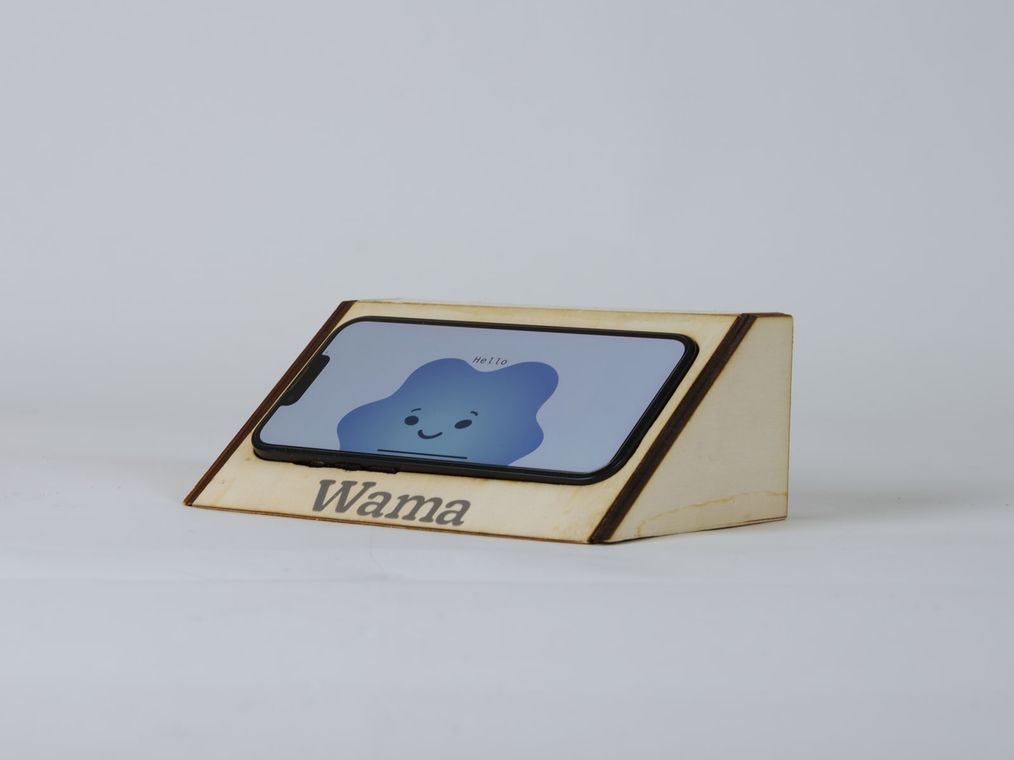
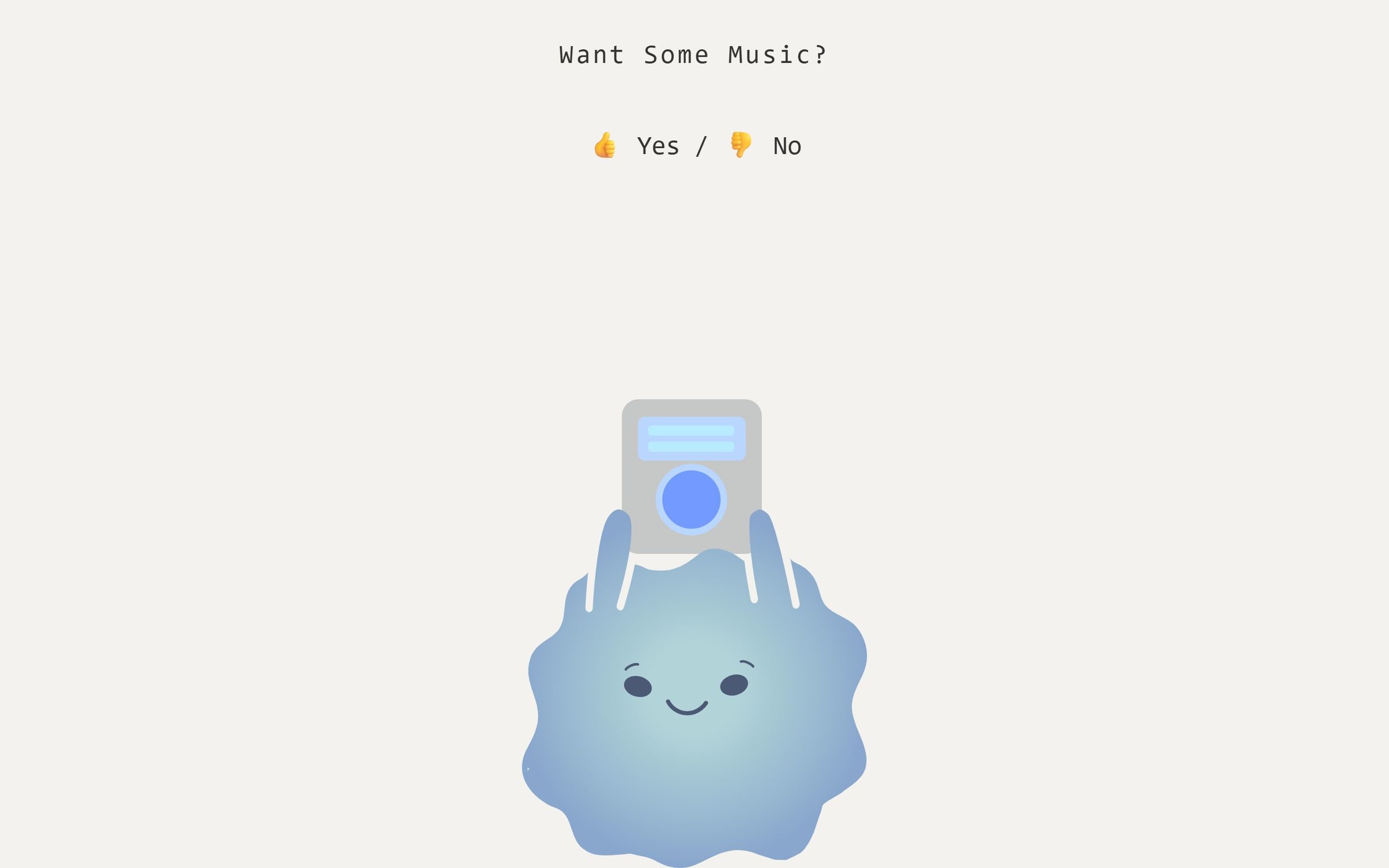
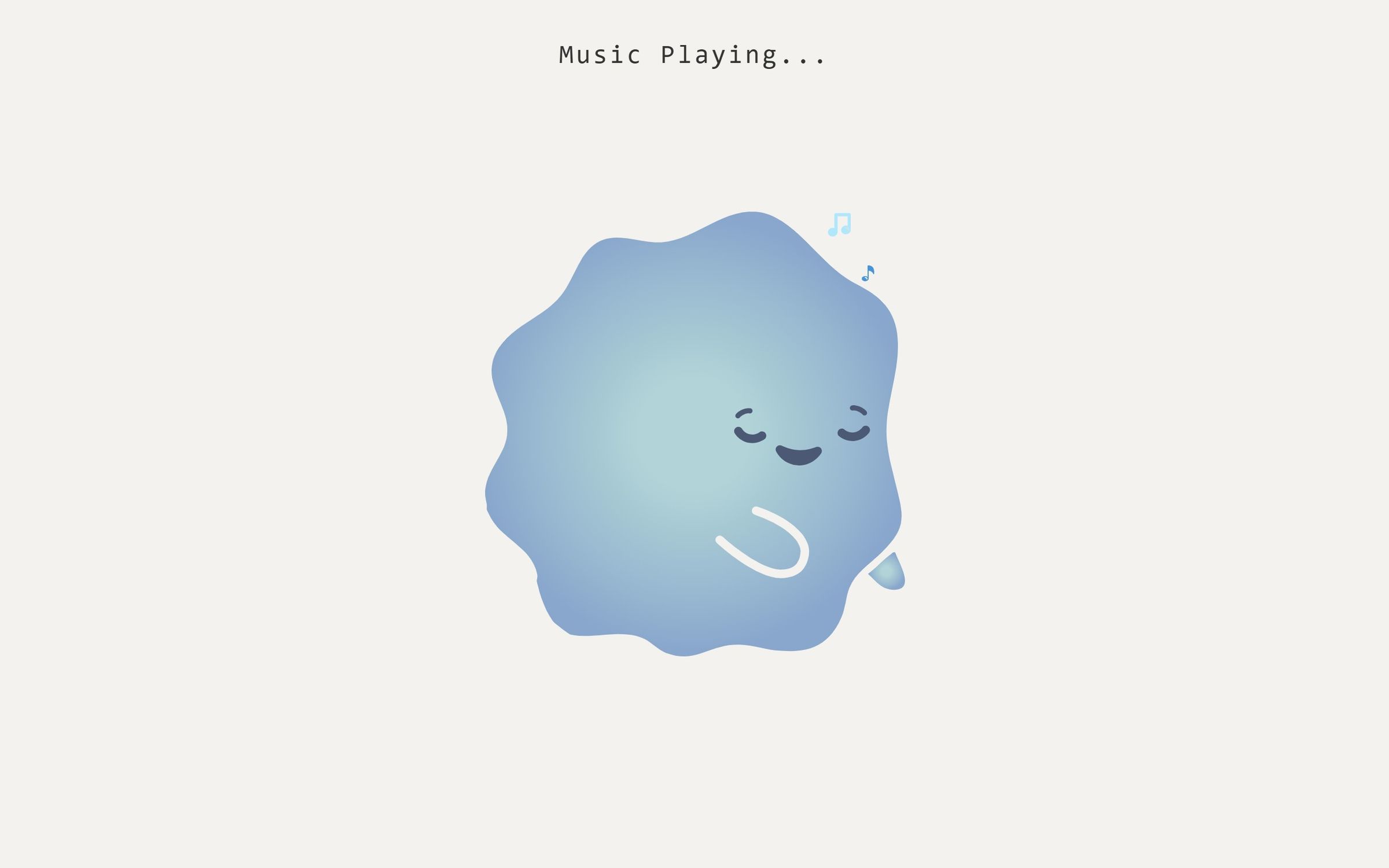
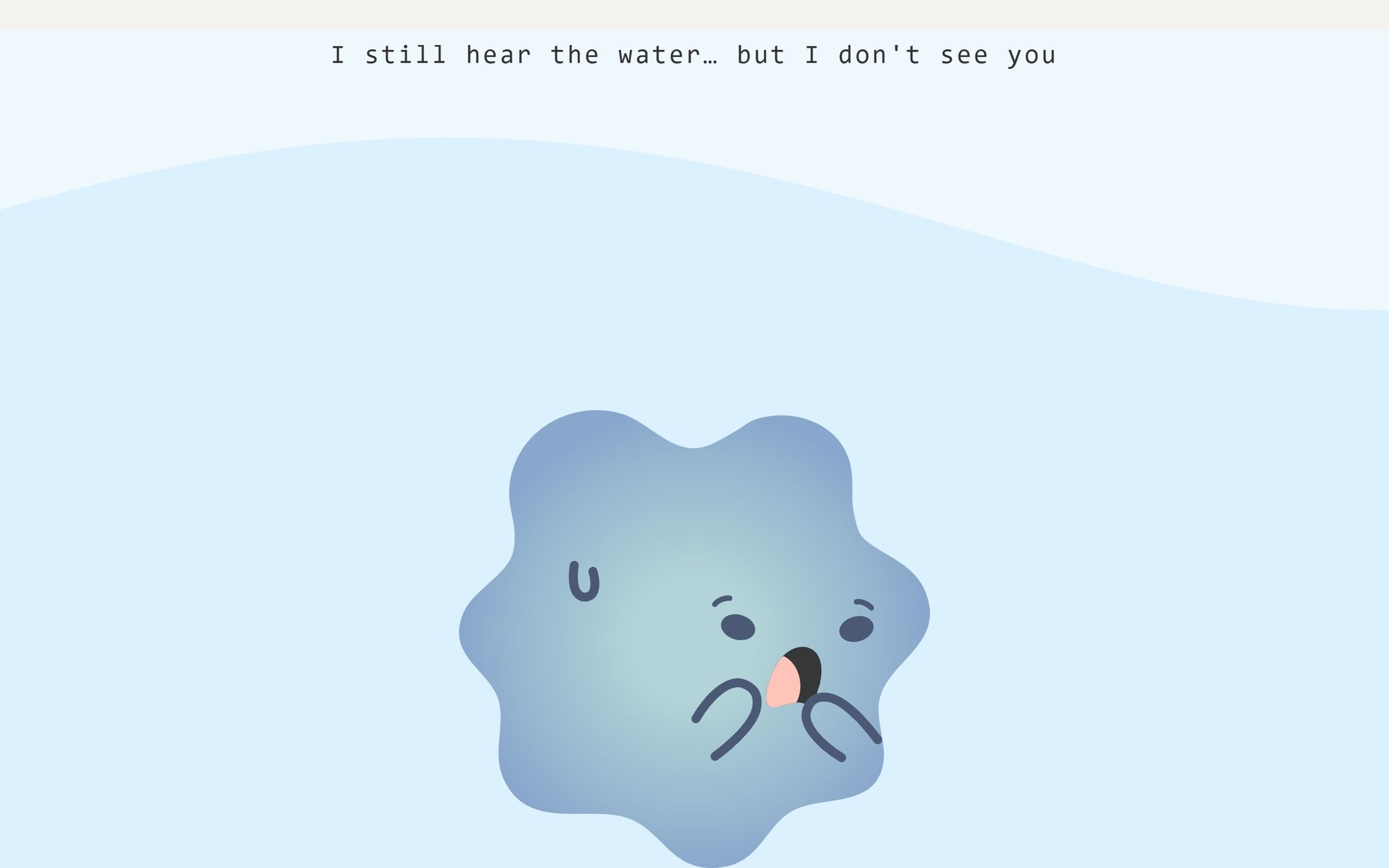
Wama's presence is carried entirely by an animated character and short sounds, never text or notifications during the task. It greets you when you arrive, settles in while the water runs, and after a while asks once whether you want music. When the tap runs with nobody there, it simply looks worried.
That worry is the environmental message. There is no water meter, no counter, no gamification: the concern is expressed as affect, which keeps the whole thing in the register of feeling rather than accounting. The character work that makes this land was a teammate's; my job was to make it run.
Bringing three parts into one product
My real contribution was turning three separate pieces into one coherent thing: a teammate's interface and character animation, another's local-ML detection with MediaPipe and Teachable Machine, and the interaction logic that ties states to responses. A lot of it started as AI-generated code: fast to produce, messy to trust.
So the work was a developer's work. Restructuring that code into something clean and maintainable, making the parts talk to each other reliably, and using AI as a tool inside a professional structure rather than letting it set the structure. I also built the physical sink prop the whole thing was tested and demoed on, because an interaction about a sink has to be tried at one.
A working companion that runs entirely on a phone mounted at the sink, waking, greeting, accompanying, and worrying in real time from a single camera feed.
Three separate workstreams (sensing, character, and interaction logic) merged and cleaned into one coherent app, with a purpose-built sink prop to test and demo it on.
Local-only by design. All processing stays in the browser, so presence-sensing never becomes data collection, which is the project's clearest answer to its own ethical brief.
Wama was my first hands-on experience with machine learning, and the course was really a discovery: a chance to see how these new sensing and interaction modes could become part of a design project at all. What stuck was less the model than the framing around it. An agent that notices without optimizing, and the realization that keeping the processing on the device is what lets a sink companion stay on the right side of surveillance rather than drift into it.