BrushBuddy
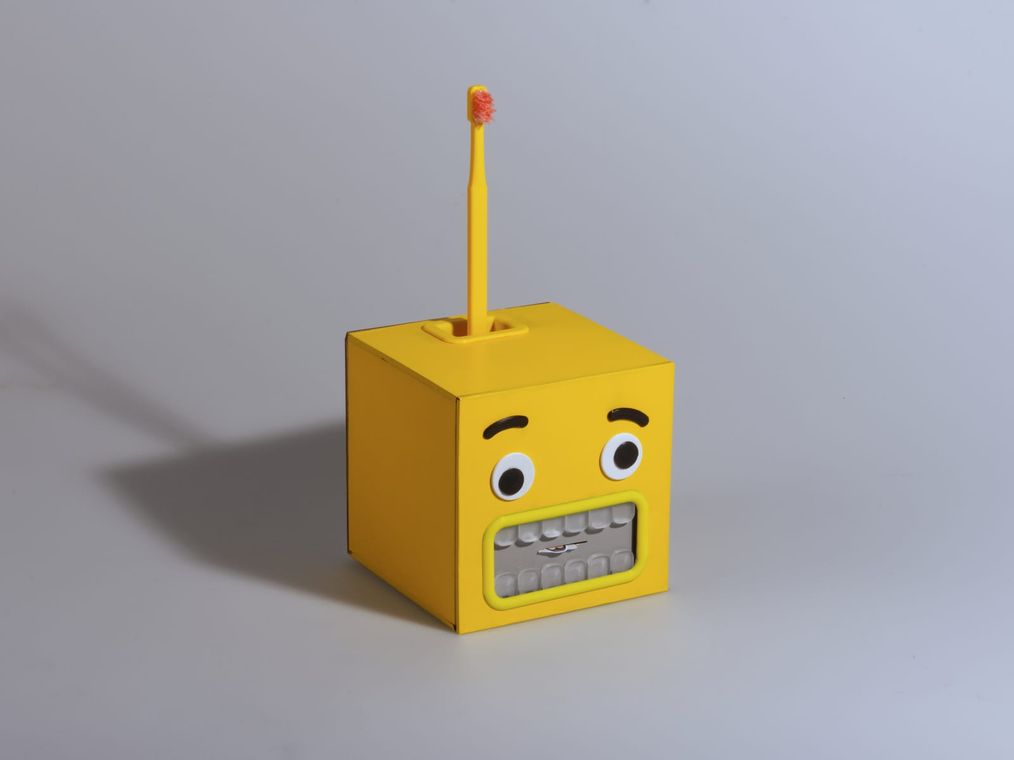
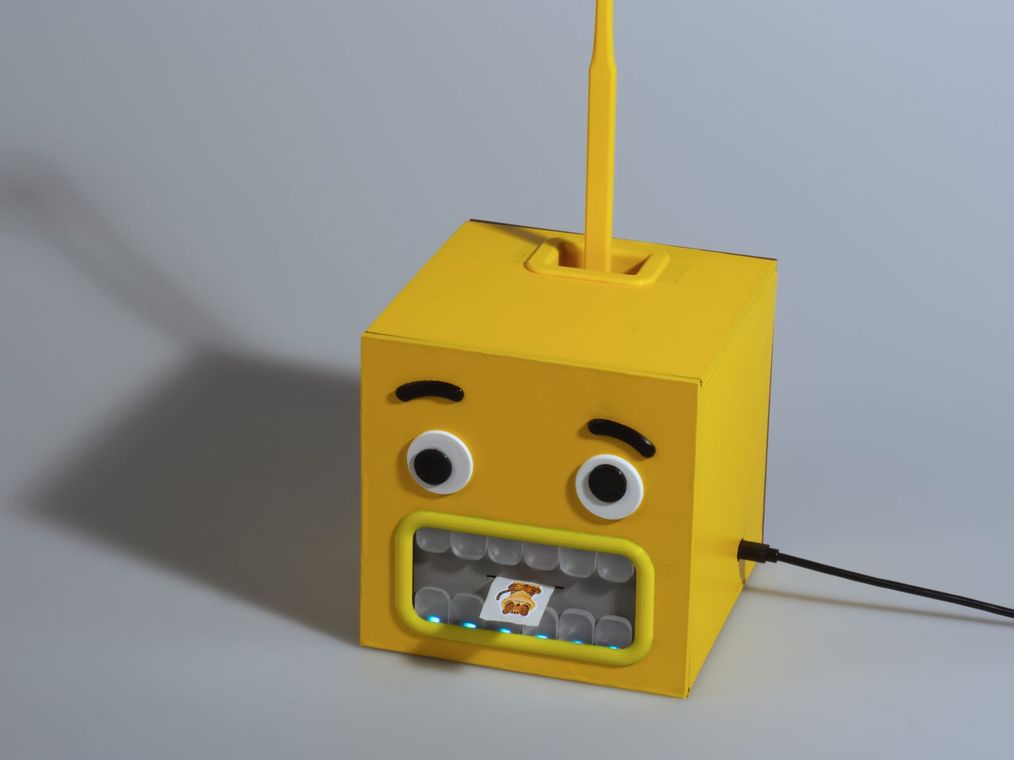
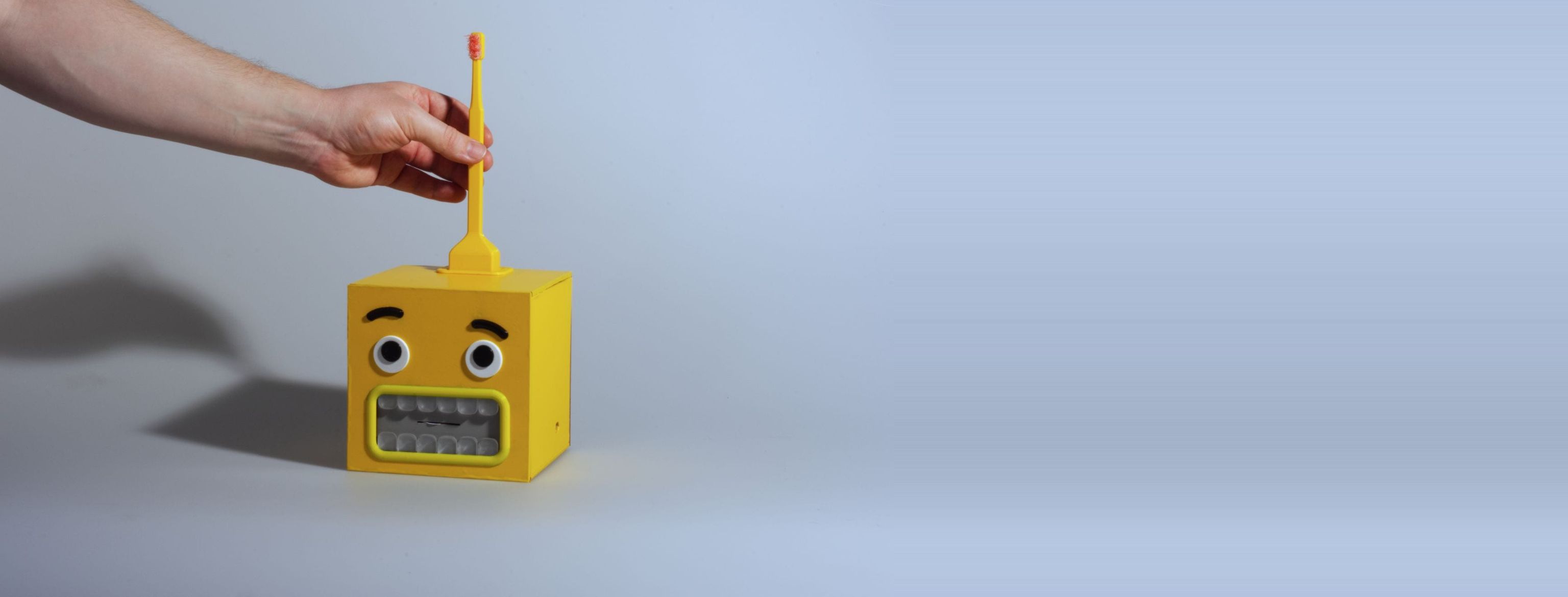
A monster buddy cube that guides two-minute toothbrushing for children aged 4 to 8. Pull out the toothbrush and the cube's face reacts through light, motion, and sound, lighting twelve teeth in sequence and only advancing while the child is actually brushing.
- Role
- Electronics & firmware
- Year
- 2026
- Host
- SUPSI · ID140
- Scope
- Team of two · 5-day sprint
- Shipped
- Working prototype
Children aged 4 to 8 often resist toothbrushing, lose attention before two minutes, or stop when the routine feels repetitive. The usual fix, a timer, measures the task but does nothing to make a child want to finish it.
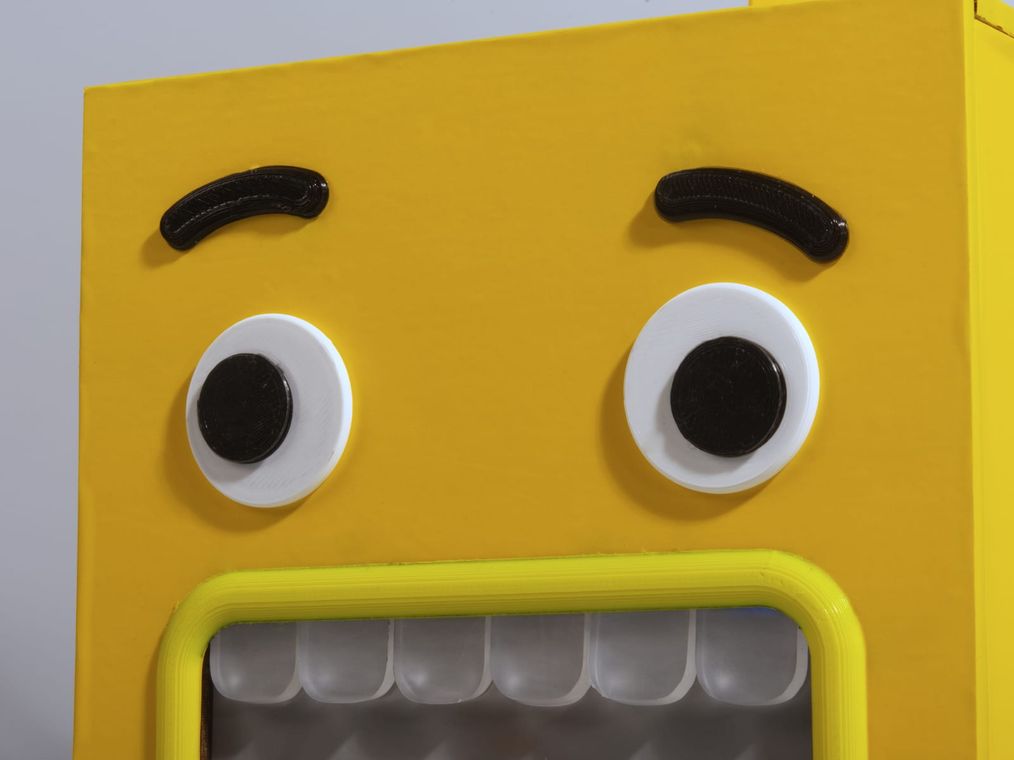
BrushBuddy reframes brushing as a short character interaction instead of a countdown. A monster buddy reacts to what the child does through light, eye movement, and sound, turning the two minutes into a small relationship rather than a wait.
- Electronics and embedded firmware for the cube and the toothbrush module
- The wireless motion-sensing link that validates real brushing
- Integration of the lighting, sound, and reward mechanism
- Ideation and scope framing on day one with the team
- The cube's CAD, fabrication, and the monster character (Nicholas Vos)
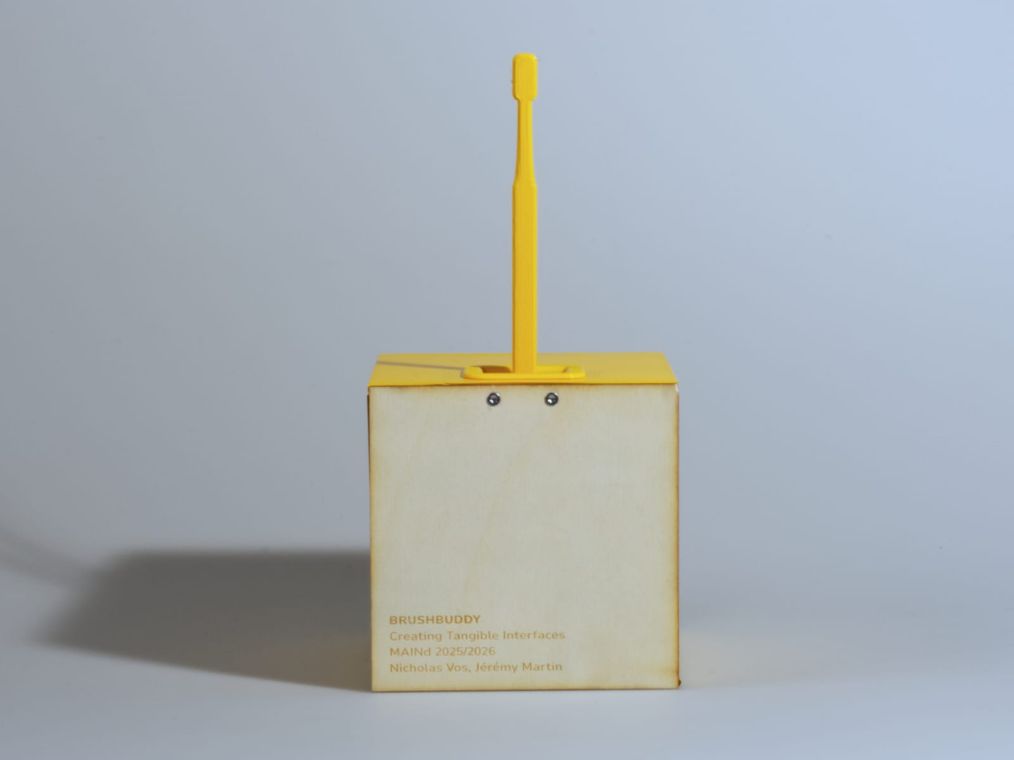
Team of two (Jérémy Martin, Nicholas Vos) for ID140 Creating Tangible Interfaces at SUPSI, taught by Lorenzo Romagnoli and Marco Lurati.
Effort you can see
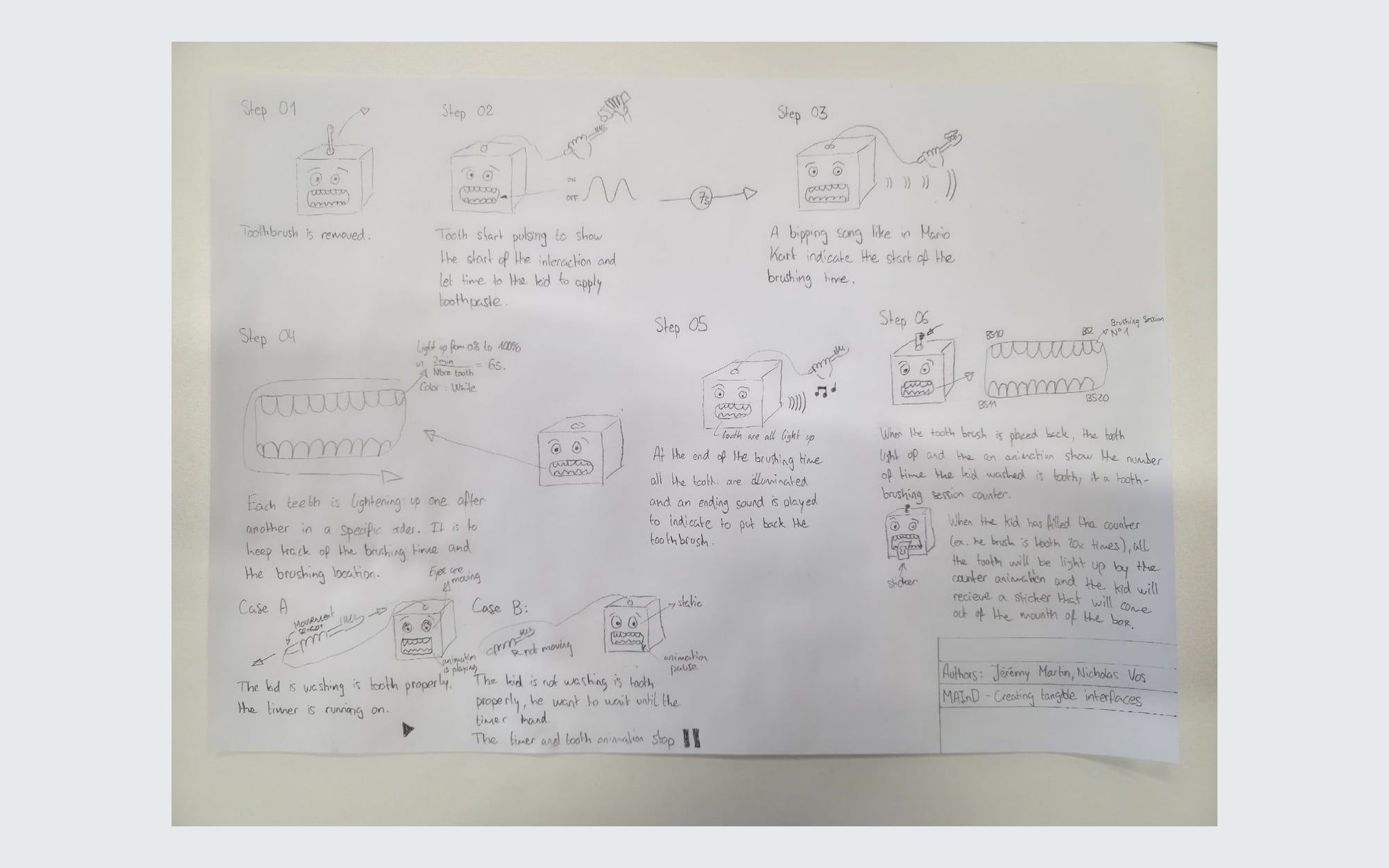
A timer tells a child how long is left; it does nothing to make them want to stay. BrushBuddy replaces the countdown with a character that reacts. The two-minute routine becomes a visible sequence of twelve teeth that light up one by one, so the child always sees what is done and what remains, and the order to brush in.
The key move is that the sequence only advances while brushing motion is actually detected. Stop, and the buddy pauses with you. That turns effort directly into progress. Motivation then stretches past a single session: completed routines accumulate, and after twelve the cube dispenses a sticker, giving a reason to come back tomorrow.
A session, start to finish
A session begins the moment the toothbrush is lifted from its dock. The cube runs a short preparation beat, time to find the toothpaste, then a start cue opens the two minutes. The teeth light in sequence while the eyes move, and if brushing stops, the eyes stop and the lighting pauses until it resumes.
An end cue closes the routine and prompts docking the brush. When it is back, the cube shows how close the child is to the next sticker, and after twelve completed sessions it dispenses one and resets the counter. Every condition stays explicit and observable, so a four-year-old can read the whole loop without being told.
Two microcontrollers, one routine
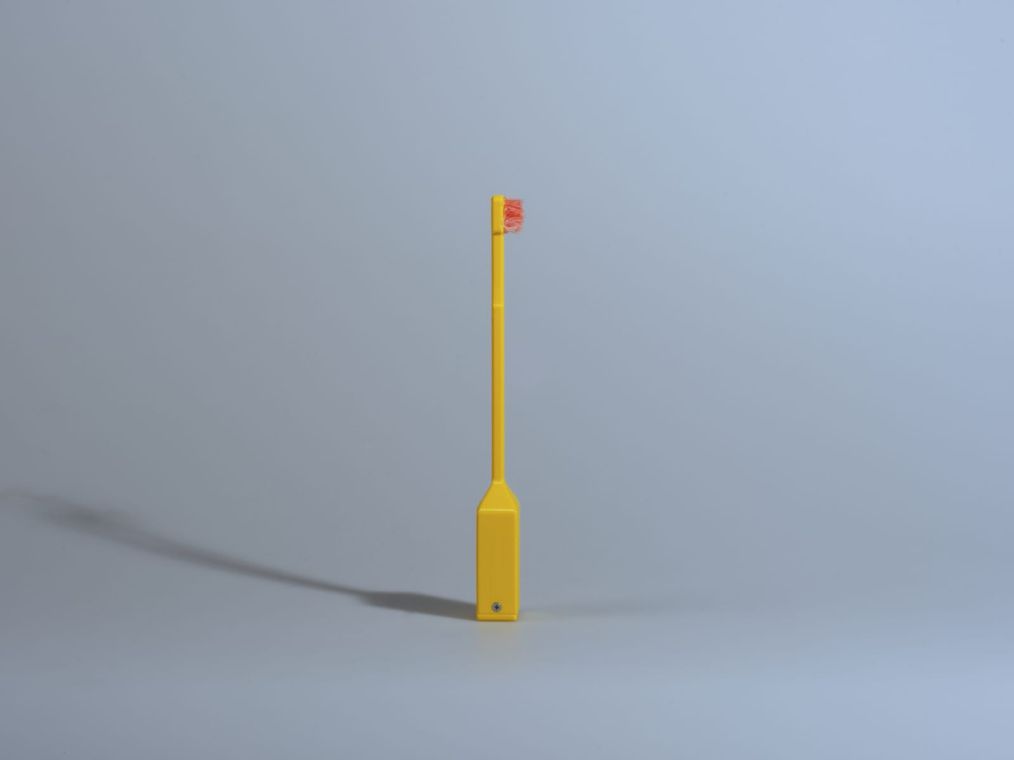
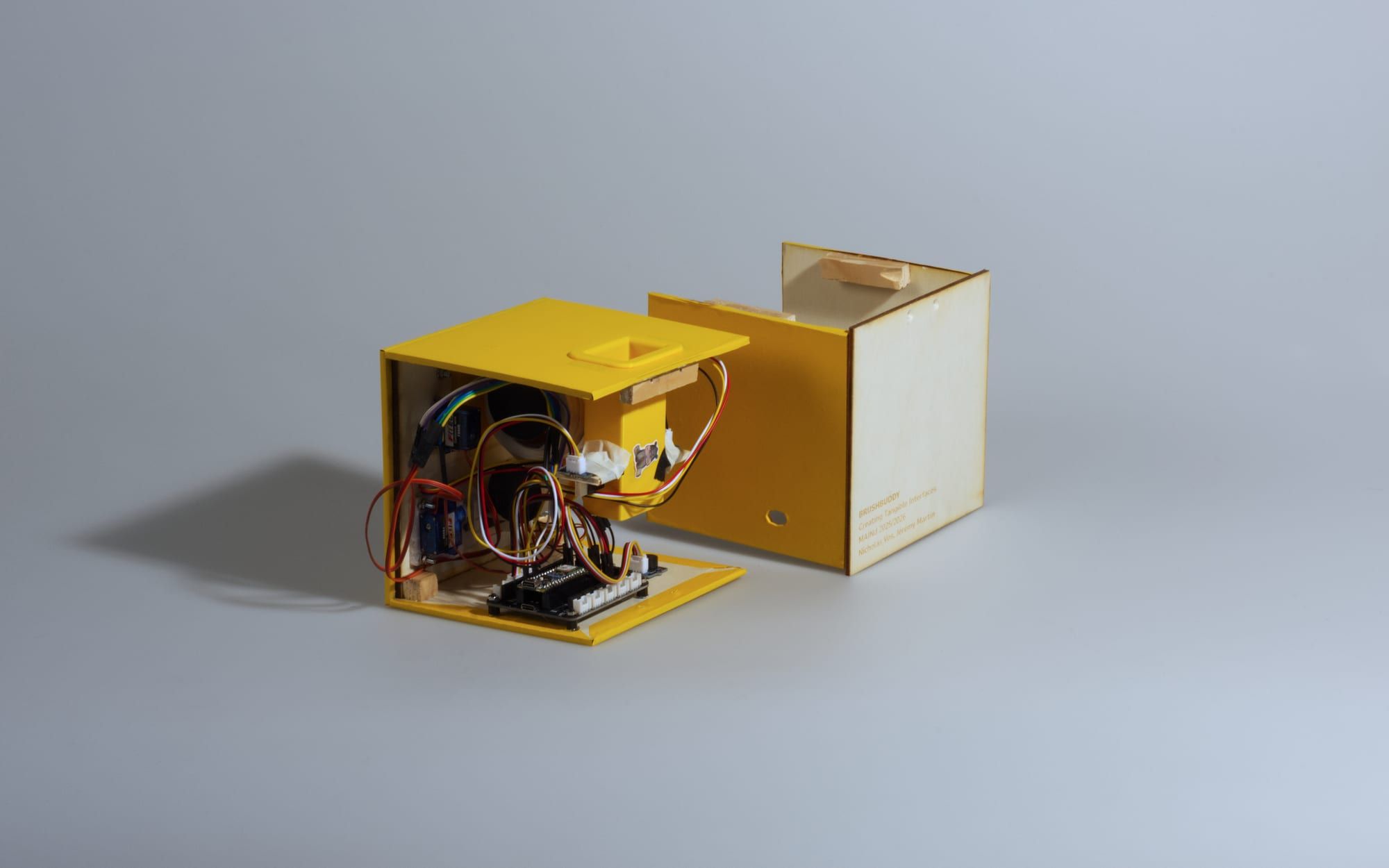
My side of the build was the electronics across two devices. The cube holds the brain: the animated face, the twelve addressable teeth, the sound cues, and the servo that dispenses stickers. The second microcontroller lives in the toothbrush, where a motion sensor reads whether the child is really brushing and sends that to the cube over a wireless link. Splitting the system in two is what lets the routine tell brushing apart from a toothbrush sitting still.
The lit teeth were their own small problem, solved with plexiglass teeth sanded to diffuse the light evenly instead of glaring. Each subsystem was brought up on the bench before it went into the cube, because in a five-day build there is no time to debug everything at once.
Five days, end to end
The project was a five-day fast-prototyping sprint under the theme "Reminder". Day one narrowed a broad brief to one stable, well-defined routine: toothbrushing for children aged four to eight. Day two chose and bench-tested the electronics while the cube's form took shape in CAD. Day three brought up the embedded program and the tooth lighting and began fabrication.
Day four assembled the cube and added the second microcontroller in the toothbrush, sending motion wirelessly. Day five was tuning and reliability, with the sticker dispenser, the fussiest mechanism, fighting back until the end. Working that fast forces a discipline I value: decide what must work first, and let everything else earn its place only if time allows.
A working tangible prototype built in a five-day sprint: a reactive cube and an instrumented toothbrush that together guide and validate a two-minute routine.
Brushing that advances only with real motion, a visible twelve-tooth progress sequence, and a sticker reward that carries motivation across days rather than a single brush.
This is my favorite of the fast-prototyping projects, and the moment that sealed it was the final presentation. With work all around the room, and not all of it made for children, the one child present walked past everything else and planted himself at BrushBuddy. For a toothbrushing toy, no usability score beats that. The five-day format is brutal and clarifying in equal measure: it forces you to prove the few things that matter first and trust the rest to follow, and watching a kid ignore the adults and play was the proof those few things were the right ones.