ELEN
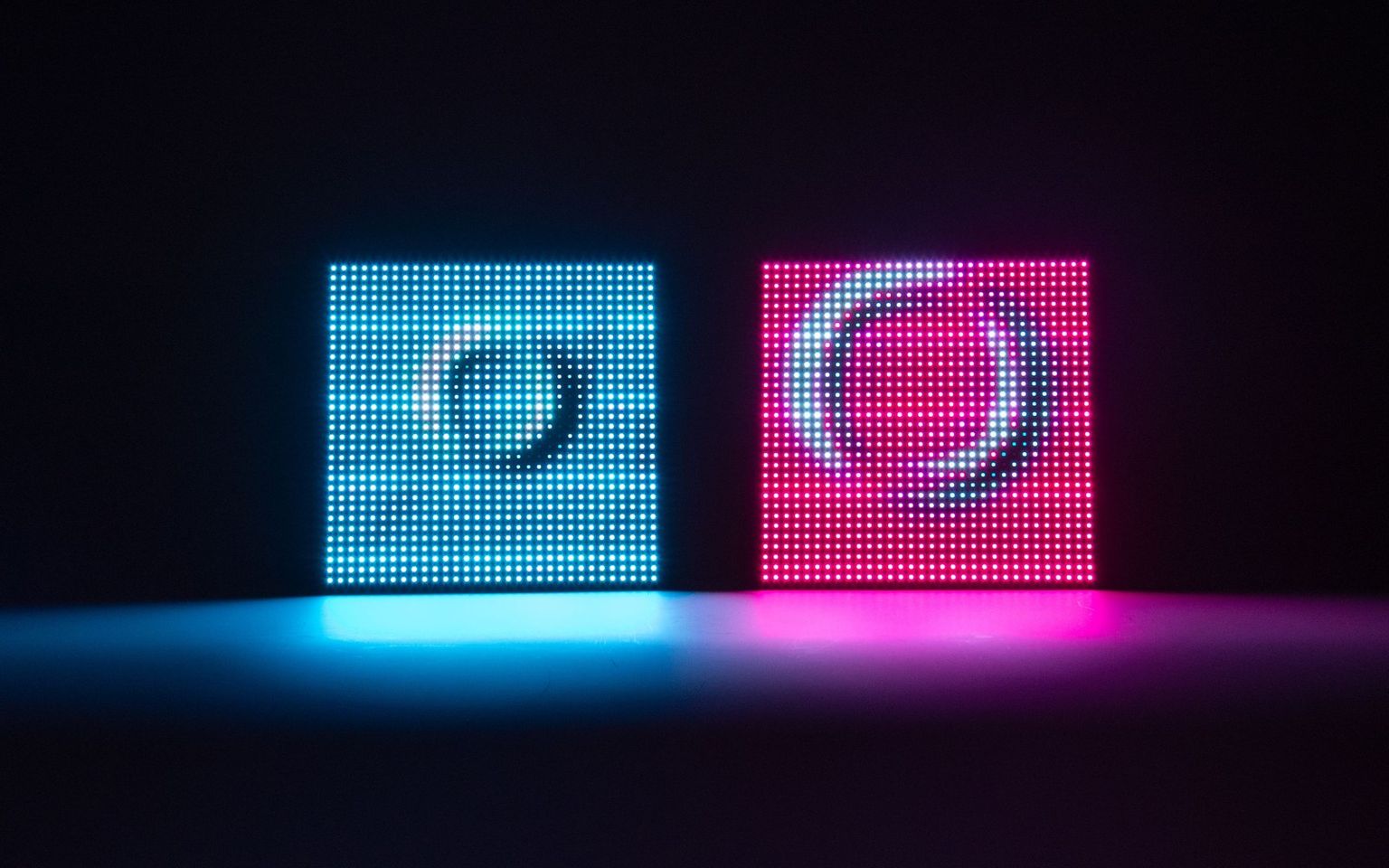
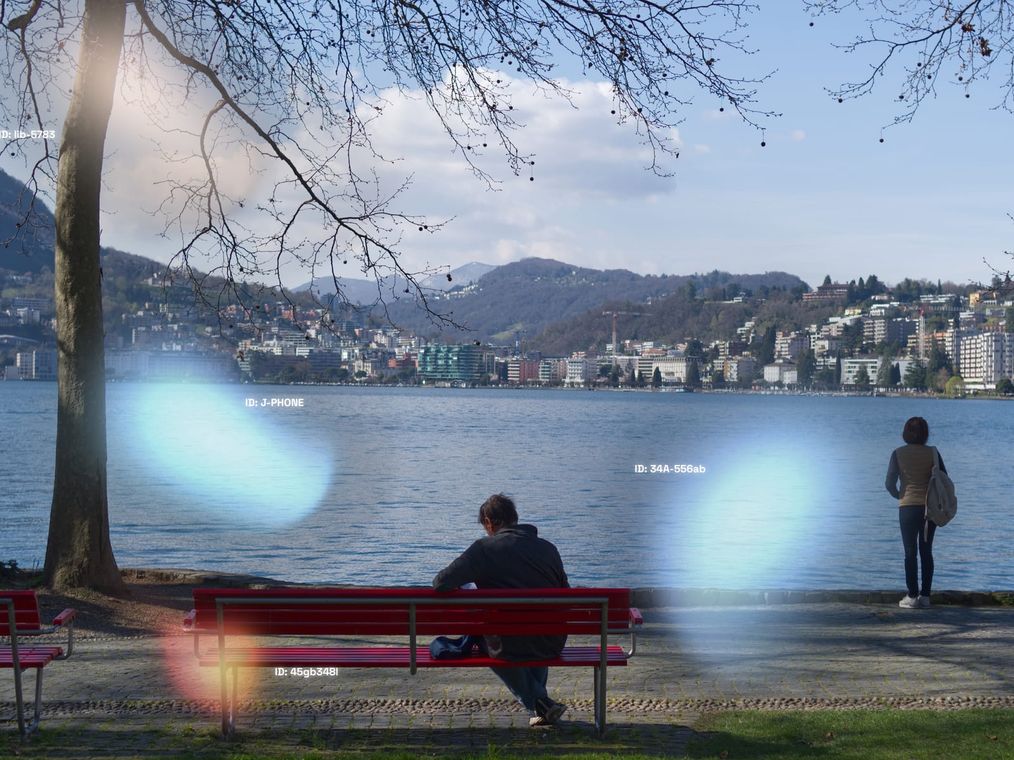
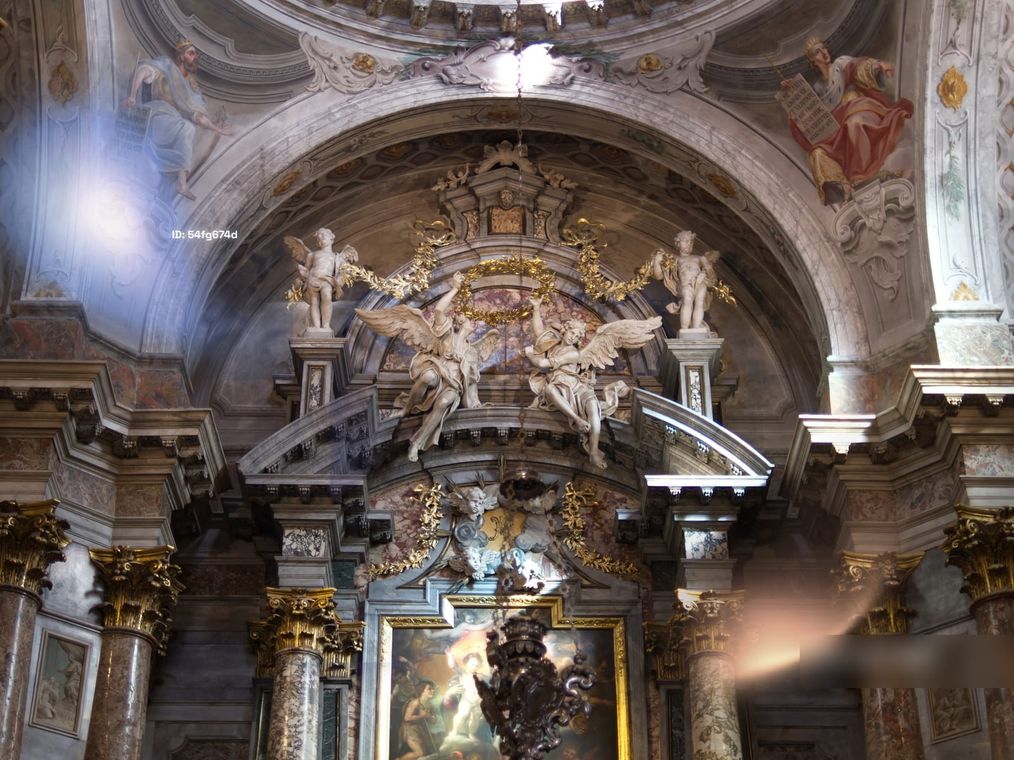
A speculative camera that photographs the invisible. ELEN detects the Wi-Fi and Bluetooth signals saturating a room and renders each one as a spectral entity drifting across a live video feed, reframing wireless infrastructure as a contemporary kind of haunting.
- Role
- Software & signal engineering
- Year
- 2026
- Host
- SUPSI · ID212 Spatial Experiences
- Scope
- Team of three
- Shipped
- Working prototype, exhibited
We move through dense clouds of wireless signal all day. Wi-Fi, Bluetooth, the constant chatter of connected devices. The infrastructure of connected life is everywhere around us, and we perceive none of it.
The course asked for a "magical camera": a speculative device that extends human perception beyond its natural limits. Our question followed directly. What if a camera could photograph the wireless presences filling a room?
The framing came from Shadow Creatures, the research thread of Marco De Mutiis, digital curator at Fotomuseum Winterthur, who studies how networked and algorithmic technologies see. It traces a line from nineteenth-century spirit photography to computational imaging. Ghosts are no longer supernatural; they are infrastructural. ELEN is a camera for those ghosts.
- The complete software architecture, from wireless monitoring through to the live visual overlay
- The signal-to-entity translation, turning raw radio data into the behavior of each apparition
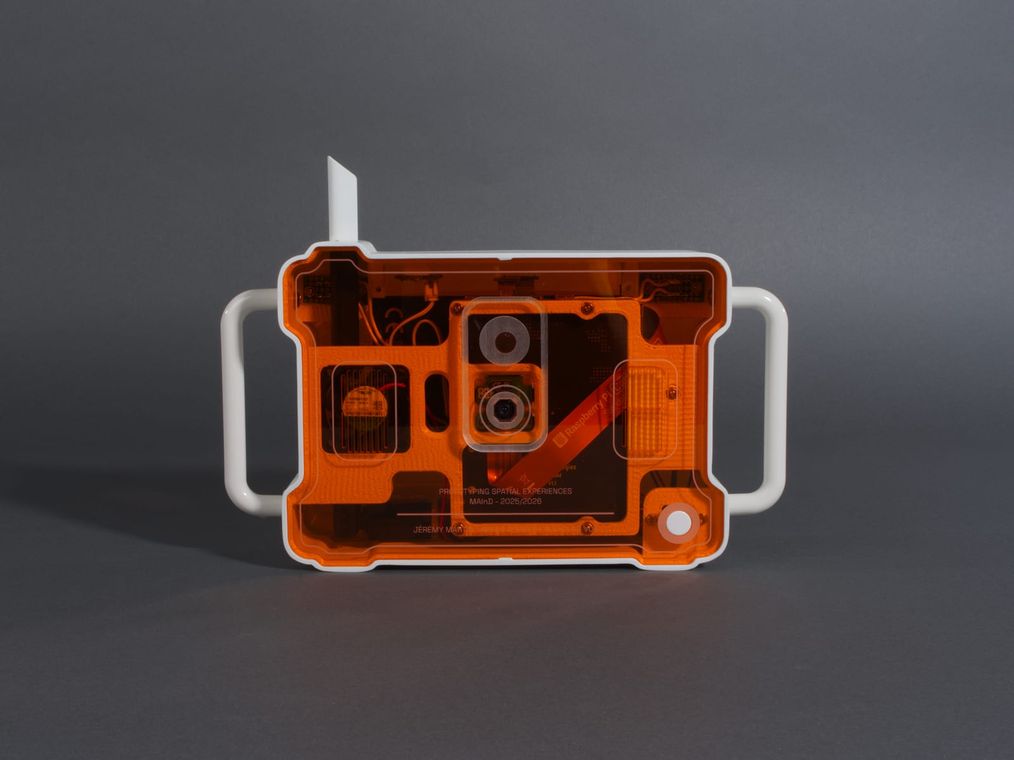
- Hardware integration, the camera, motion sensing, battery monitoring, and controls
- Technical documentation of the system
- Co-led ideation and concept with the team
- Photo and video documentation
- The physical enclosure and its retro-futuristic aesthetic (Nicholas Vos)
- The visual identity and the fluid-simulation look (Nerea Asensio)
Team of three (Jérémy Martin, Nerea Asensio, Nicholas Vos) for ID212 Prototyping Spatial Experiences at SUPSI. Taught by Leonardo Angelucci, a Zürich-based designer and coder, and Marco De Mutiis, digital curator at Fotomuseum Winterthur.
Ghosts are infrastructural
Speculative design earns its strangeness by being precise about the thing it makes strange. Shadow Creatures gave us the lineage: imaging technologies have always been used to perceive what the eye cannot, from spirit photography to thermal and computational cameras. We took the idea literally and pointed it at the wireless layer.
That decided the project's register. ELEN is not a data visualization with a spooky skin. It is a camera whose subject happens to be the electromagnetic presence of the people and devices in a space, treated with the seriousness the ghost metaphor deserves.
From metaphor to signal
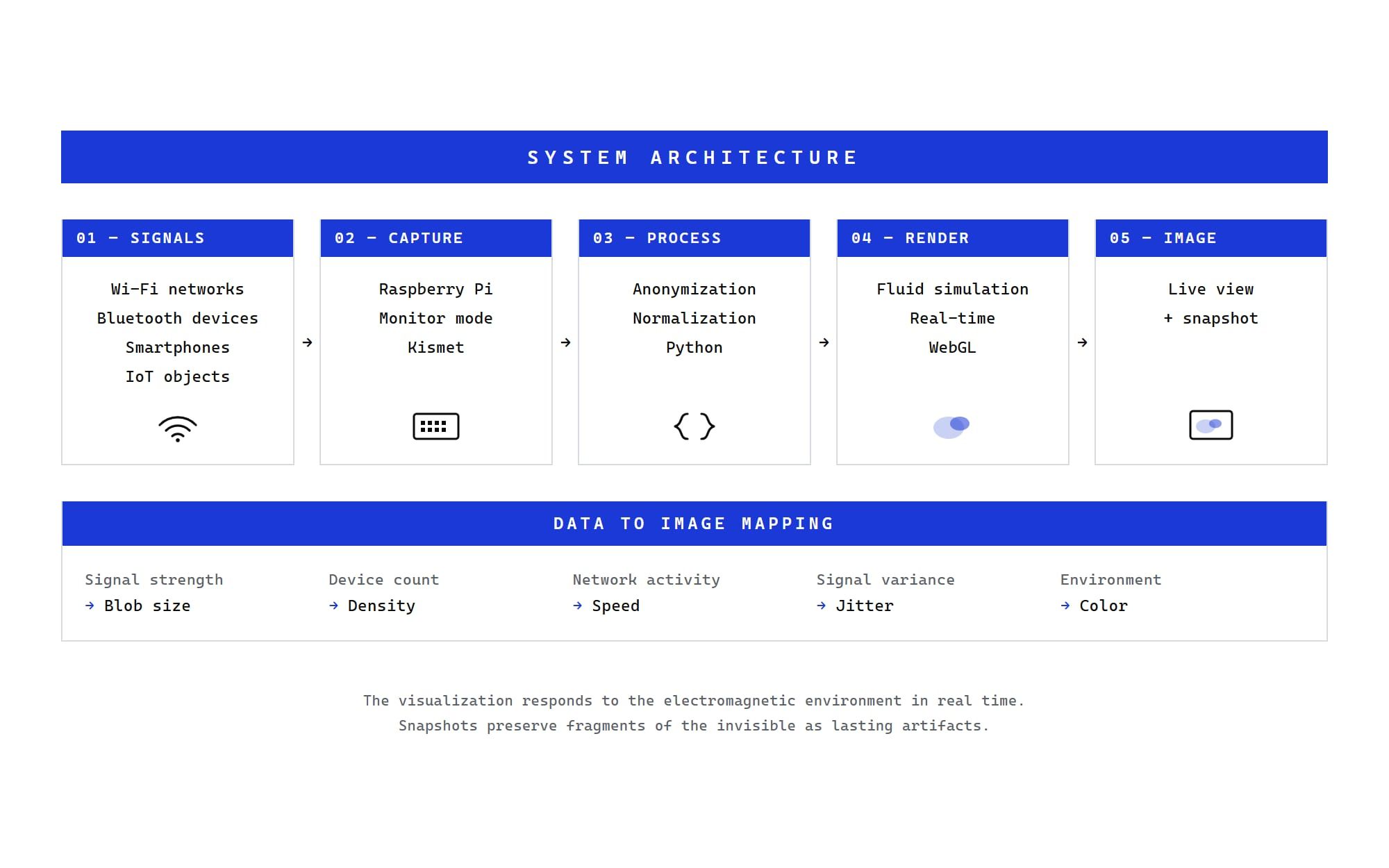
A ghost you invent is decoration. A ghost you measure is an image. The project only became real once the apparitions were driven by the actual radio emissions in the room, so the camera's true sensor is not its lens but a wireless antenna in passive monitor mode.
It listens without connecting to anything, capturing each transmission's signal strength and a device identifier. Those identifiers are sensitive, so they are hashed and salted the moment they arrive and never stored. ELEN reveals presence without surveilling identity, which is the difference between a poetic instrument and a tracking device.
From signal to apparition
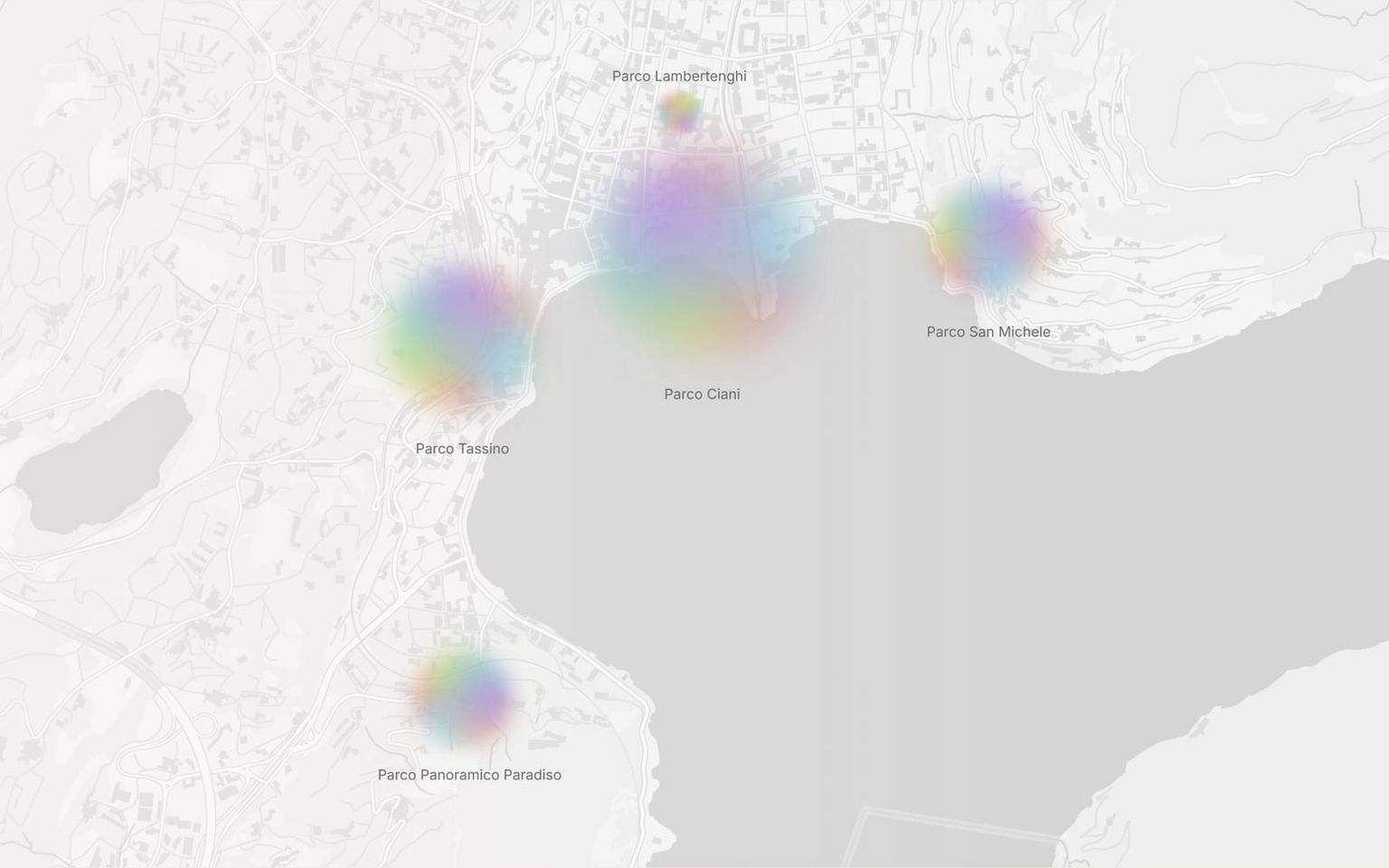
The heart of my work was the translation layer. Each detected signal is normalized and fed into a real-time fluid simulation running in the browser, where it injects particles into a shared turbulent field. Signal strength sets an entity's scale, the number of devices sets the density of the field, and network activity drives how fast it all moves.
The whole pipeline runs live: wireless monitoring feeding a reducer, a backend streaming the camera and the signal state, and a visual layer compositing apparitions over the video at sixty frames a second. Holding that frame rate while signals appeared and dissolved in real time was the engineering that made the illusion convincing.
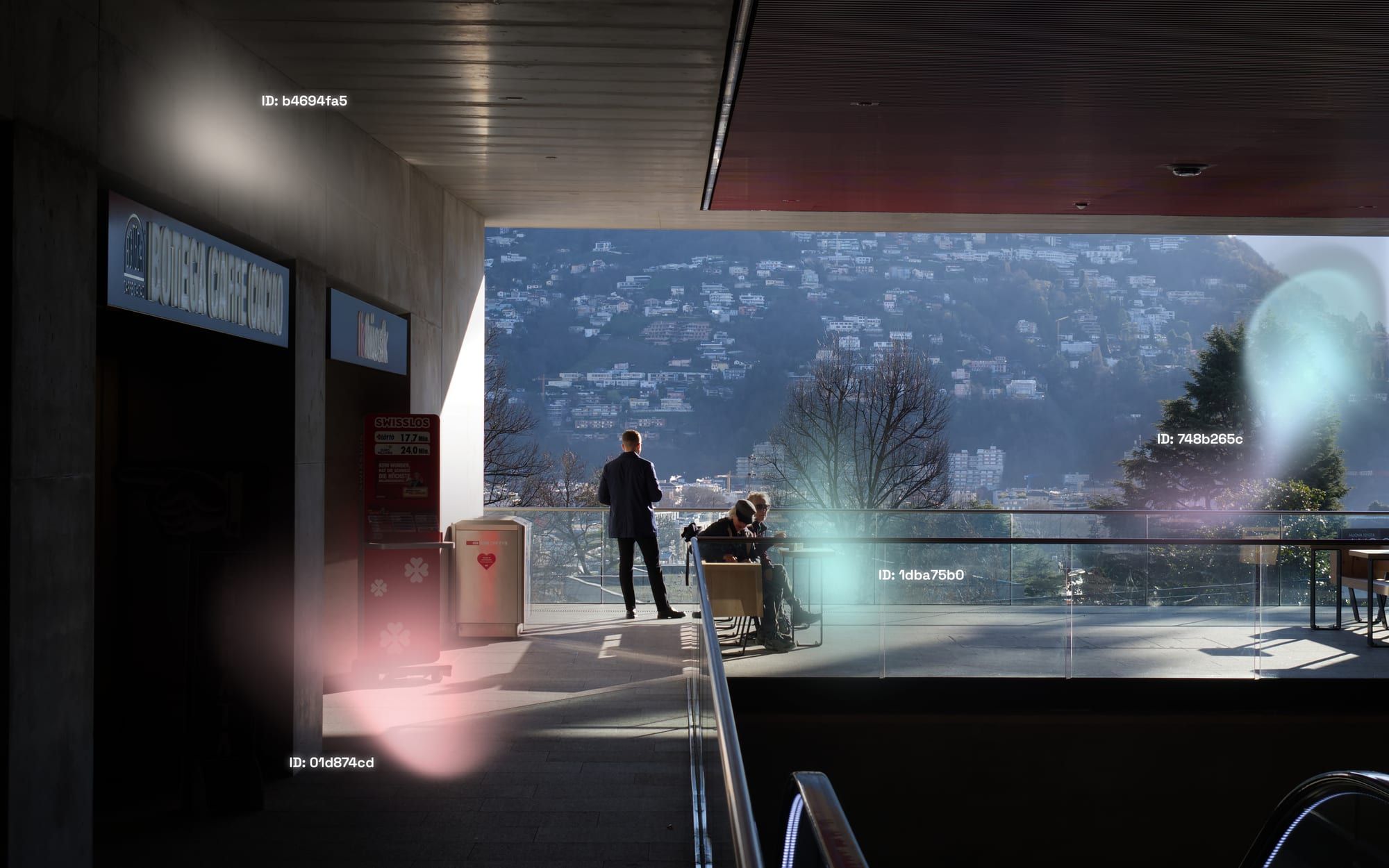
A camera you scan with your body
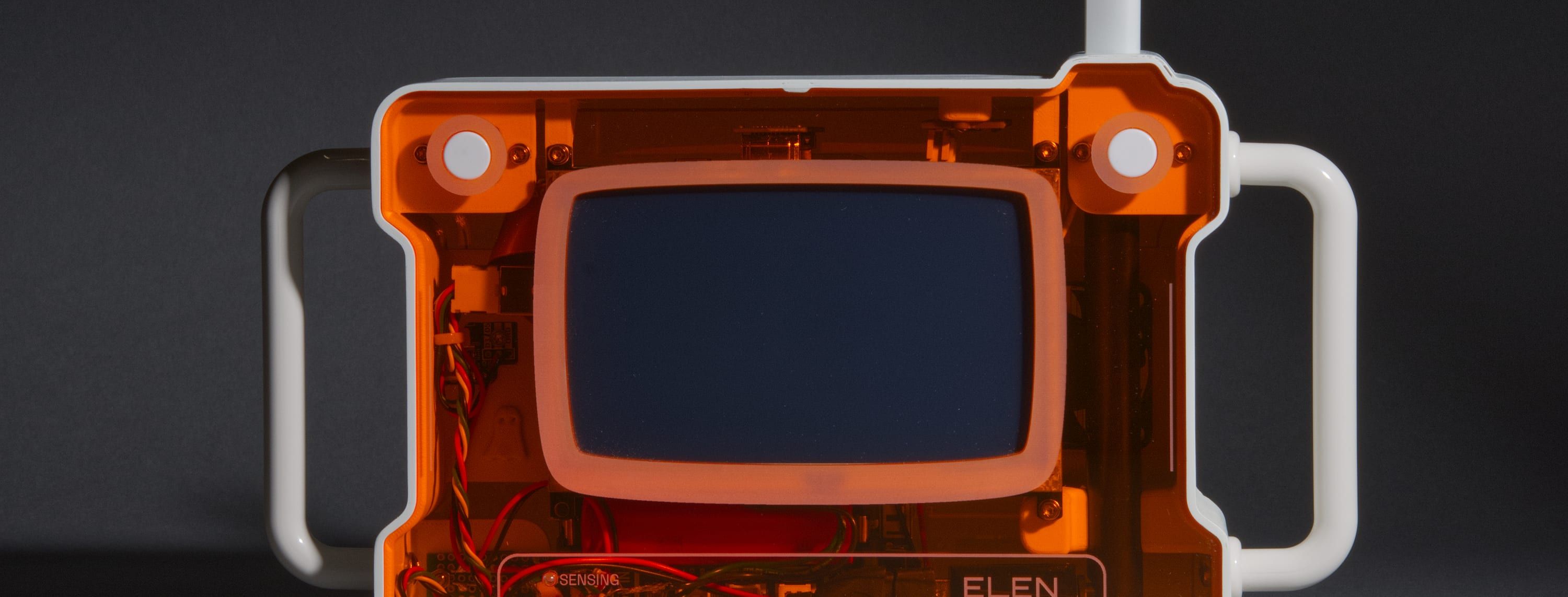
ELEN is handheld and deliberately physical. You power it from the back, capture a moment or open the gallery from two front buttons, and explore by turning through the space. Motion sensing lets the apparitions hold their place in the room as you move, so scanning feels like looking rather than browsing a screen.
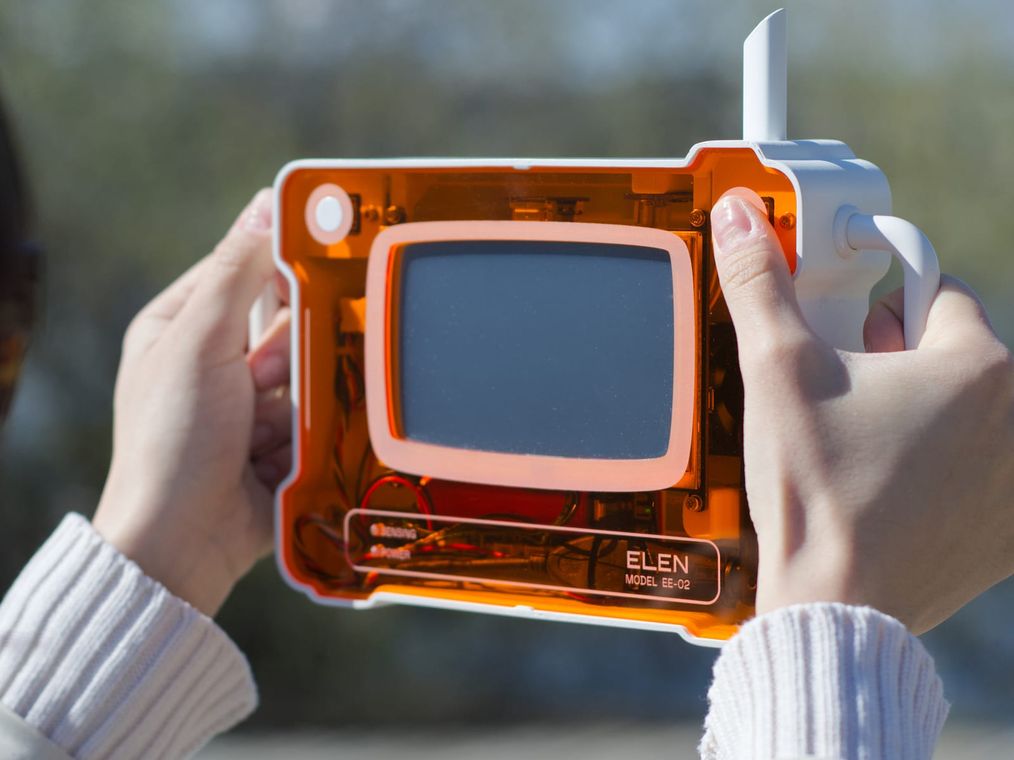
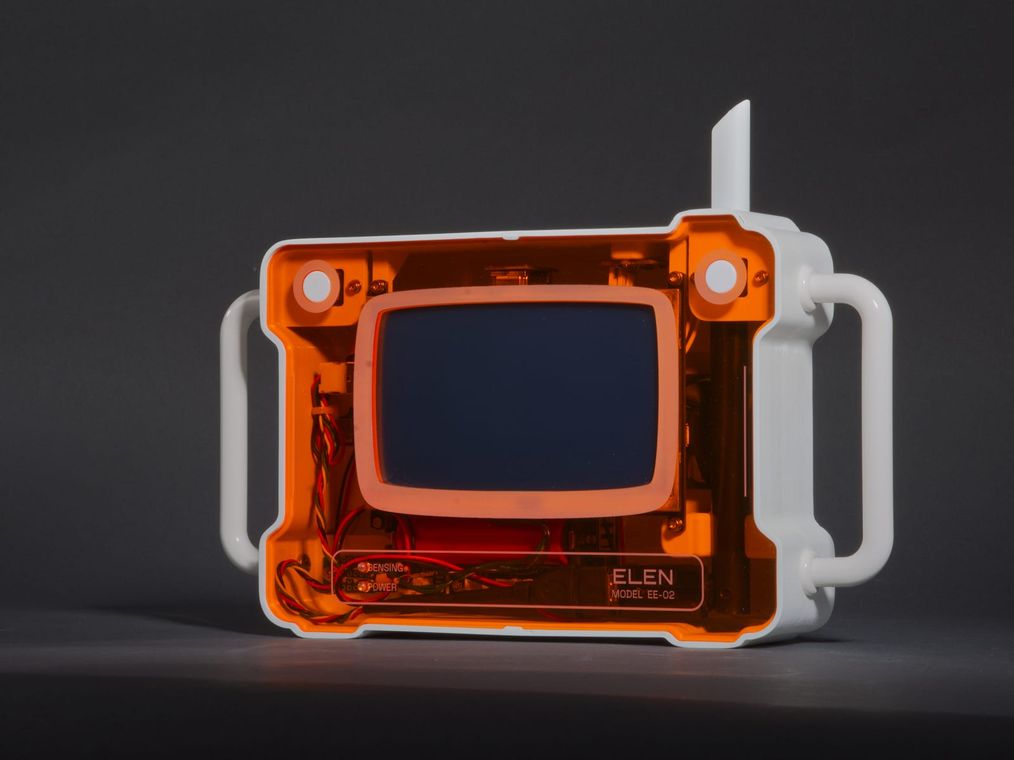
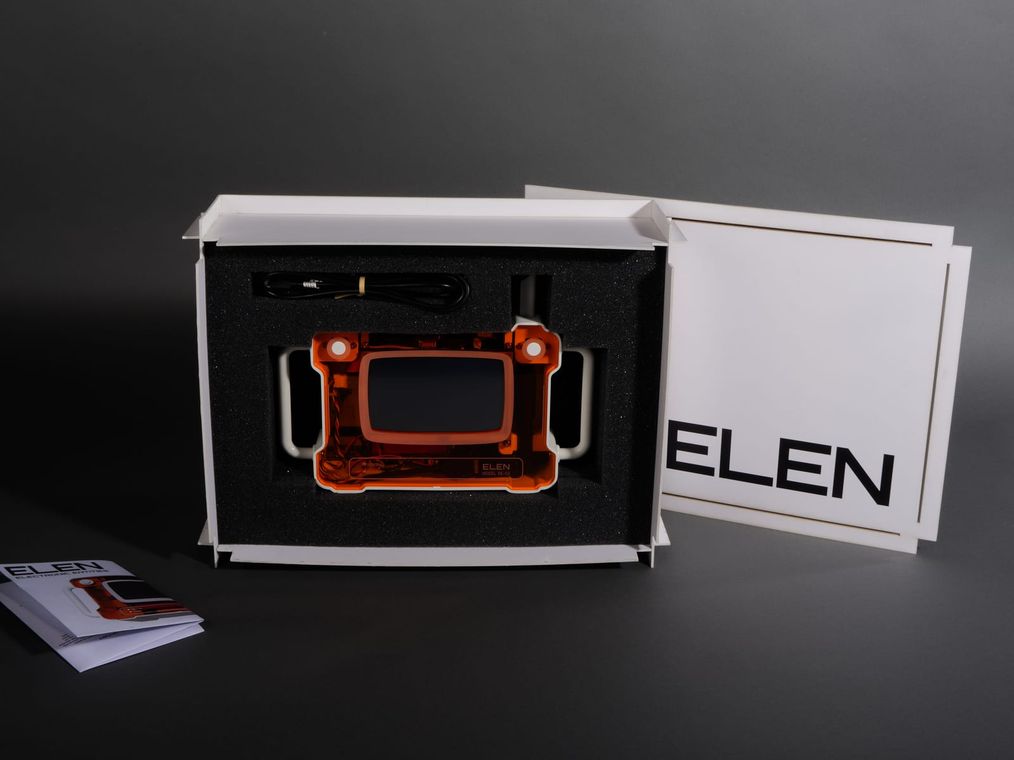
Nicholas designed the retro-futuristic enclosure, a 3D-printed chassis with laser-cut plexiglass and orange accents that reads like a piece of speculative field equipment. Nerea shaped the visual identity and the look of the fluid. My part was making the sensing, the translation, and the hardware hold together in real time without dropping a frame.
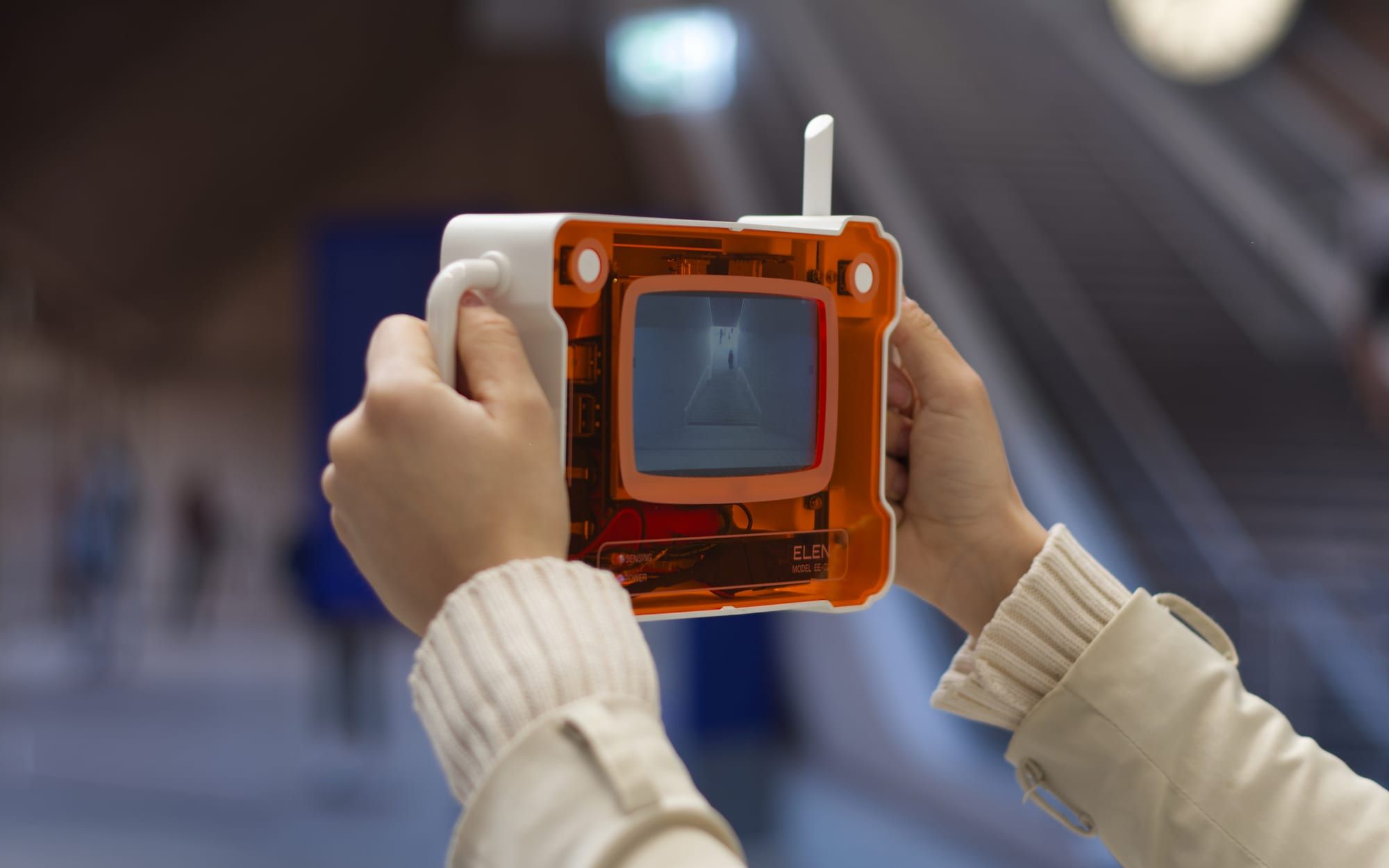
A working handheld prototype. Real-time wireless detection, translated into a living spectral overlay that responds to the devices actually present in a space.
ELEN was built for the Shadow Creatures exhibition brief at Fotomuseum Winterthur. Marco De Mutiis appreciated the project but did not select it: it read as product design more than art, too resolved as an object.
After the course it found its room anyway, selected for Milan Design Week in the digital design program.
The most useful feedback was the rejection. "Too product design, not artsy enough" is fair, and worth sitting with: we engineered a clean, resolved object for a brief that rewarded ambiguity and rough edges. The same instinct that makes me a good systems builder made the piece read as finished where art wanted it open. That the project then fit Milan Design Week says it found the right room in the end. The lesson I kept is to know which room I am designing for before I start resolving things.
- WebDigital Design Week, Milan Design Week (opens in new tab)
- WebNiwwrd: Digital Design Week report (opens in new tab)
- WebNiwwrd on Instagram: Digital Design Week picks (opens in new tab)
- GitHubSource code and documentation (opens in new tab)
- PDFBrochure (opens in new tab)