À ta Dispo
A startup concept that matches volunteers with the organizations and events that need them, taken through the full entrepreneurial process. Associations, NGOs, cultural institutions, and festivals all struggle to recruit reliable volunteers; volunteers struggle to find opportunities and get recognized. À ta Dispo is the matchmaking layer between them.
- Role
- Research & strategy
- Year
- 2024 — 2025
- Host
- HEIG-VD · Startup + Crunch
- Scope
- Team project
- Shipped
- Business plan, finances, pitch
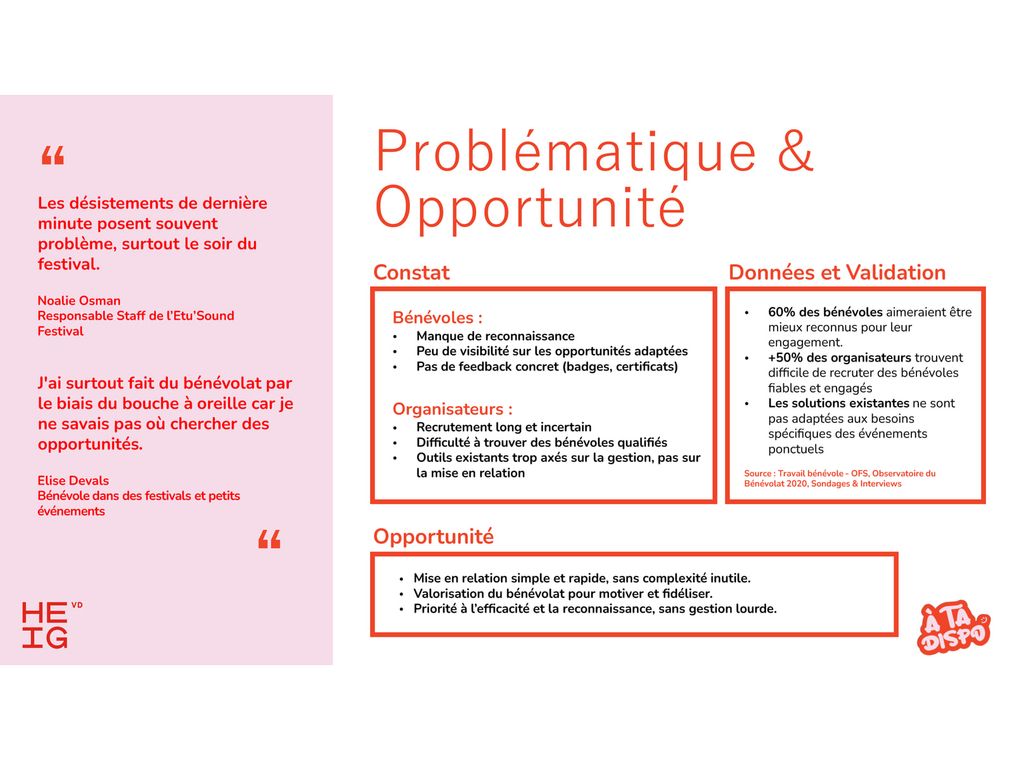
Organizations that run on volunteers (associations, NGOs, cultural institutions, festivals) all hit the same wall: recruiting reliable people is slow and uncertain, and last-minute drop-outs are common. On the other side, volunteers find opportunities by word of mouth, have little visibility on what suits them, and get no concrete recognition for showing up.
This is a problem I have lived from the inside. Running a music festival's committee taught me exactly how fragile volunteer recruitment is, which is part of why this project mattered to me. The numbers backed up the instinct: around 60% of volunteers want to be better recognized for their engagement, and more than half of organizers find it genuinely hard to recruit reliable, committed people.
- User research and problem validation: interviews, surveys, and the data behind the concept
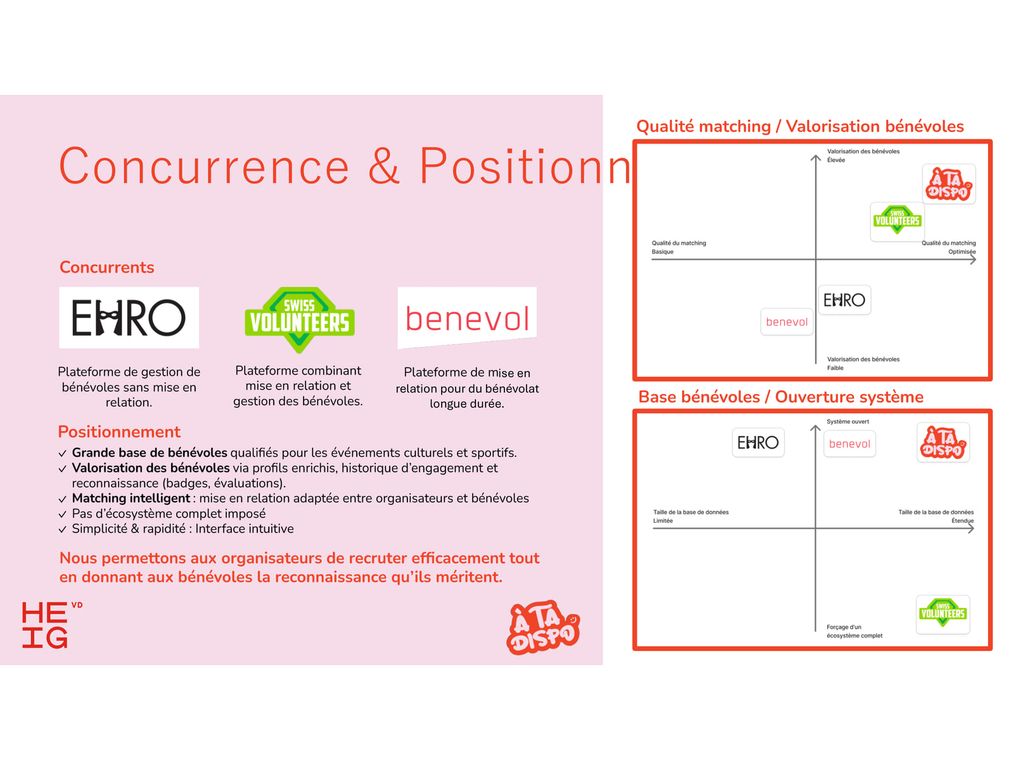
- Business and market strategy: the competitive study, value proposition, and business model
- The concept and the entrepreneurial deliverables with the team
- Parts of the financial modeling and the pitch, shared within the team
Developed across two entrepreneurship courses with shifting teams. In the Startup and Business Plan course (taught by Jacques Panchard): Morgane Devals, Leo Emeri, Joël Gaillard, Jérémy Martin, and Maxime Peretti. Reworked in the Crunch course with Leo Emeri, Jérémy Martin, Tim Cherpillod, and Arthur Junod.
A gap I'd seen from the inside
We started by validating the problem rather than assuming it. Interviews with volunteers and with the people who organize events surfaced the same two-sided frustration again and again: volunteers who relied on word of mouth and felt invisible, and organizers who could not find reliable people and dreaded the no-shows.
A survey put numbers on it, and the existing tools turned out to be the wrong shape entirely: built for managing volunteers once you have them, not for the hard part, which is the matchmaking and the recognition that keeps people coming back.
Matchmaking, not management
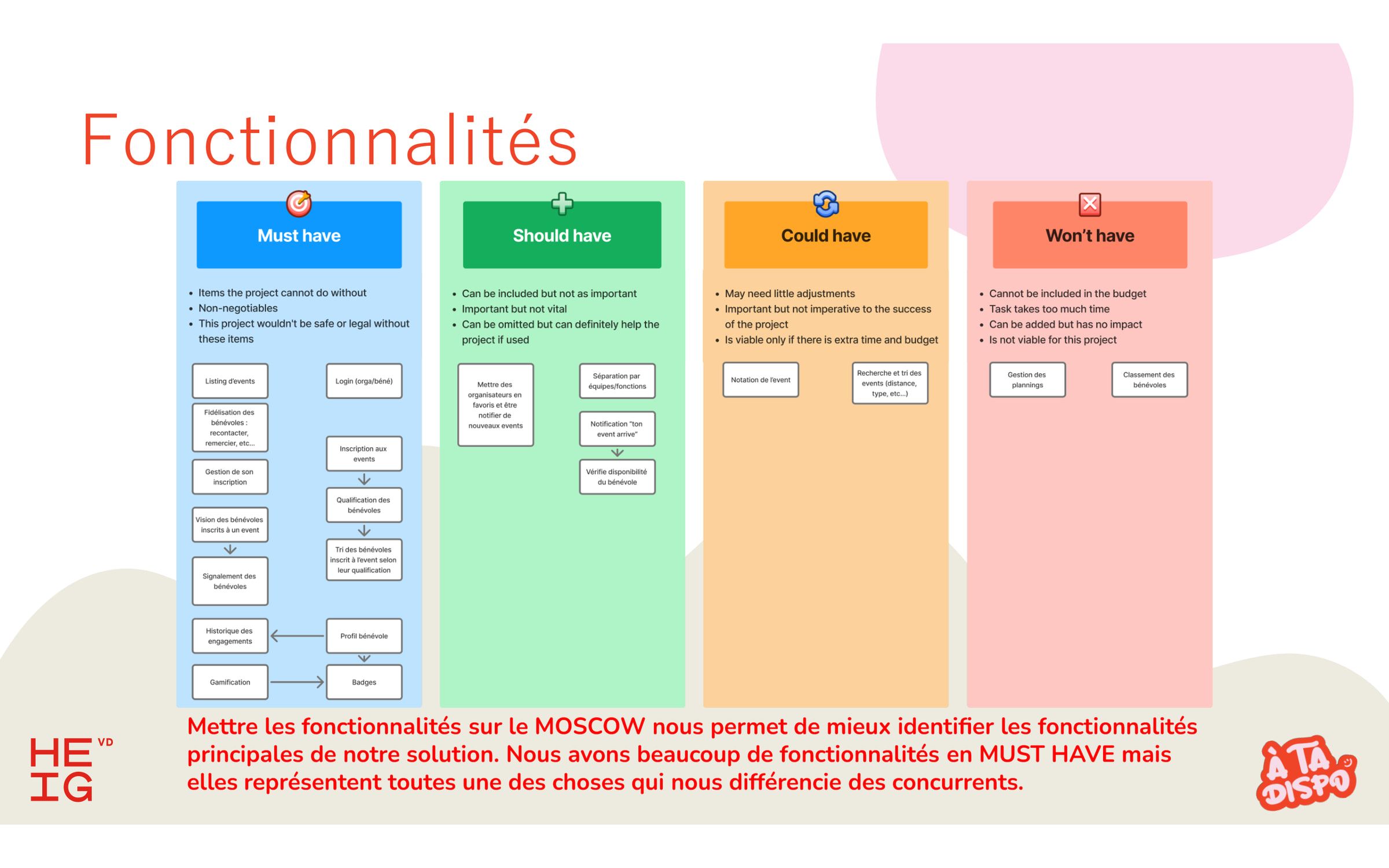
À ta Dispo is deliberately narrow: a fast, simple way to connect a volunteer with the right opportunity, across associations, NGOs, cultural institutions, and events, and a way to value that volunteering so people feel recognized and come back. Recognition is a feature, not an afterthought (think badges and certificates for real engagement), because the data said recognition is exactly what is missing.
The discipline was resisting scope. Every existing tool we looked at had drifted into heavy event-management software. We kept À ta Dispo focused on the two things that actually move the needle: efficient matching and genuine recognition, without the management bloat.
From idea to a defensible model
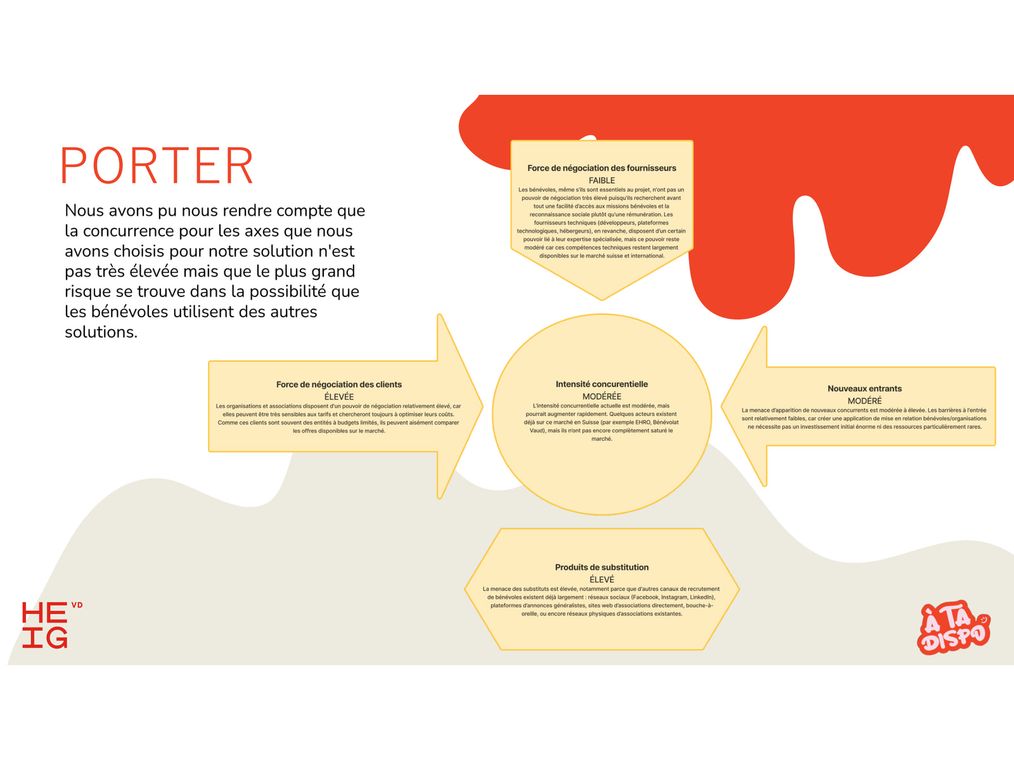
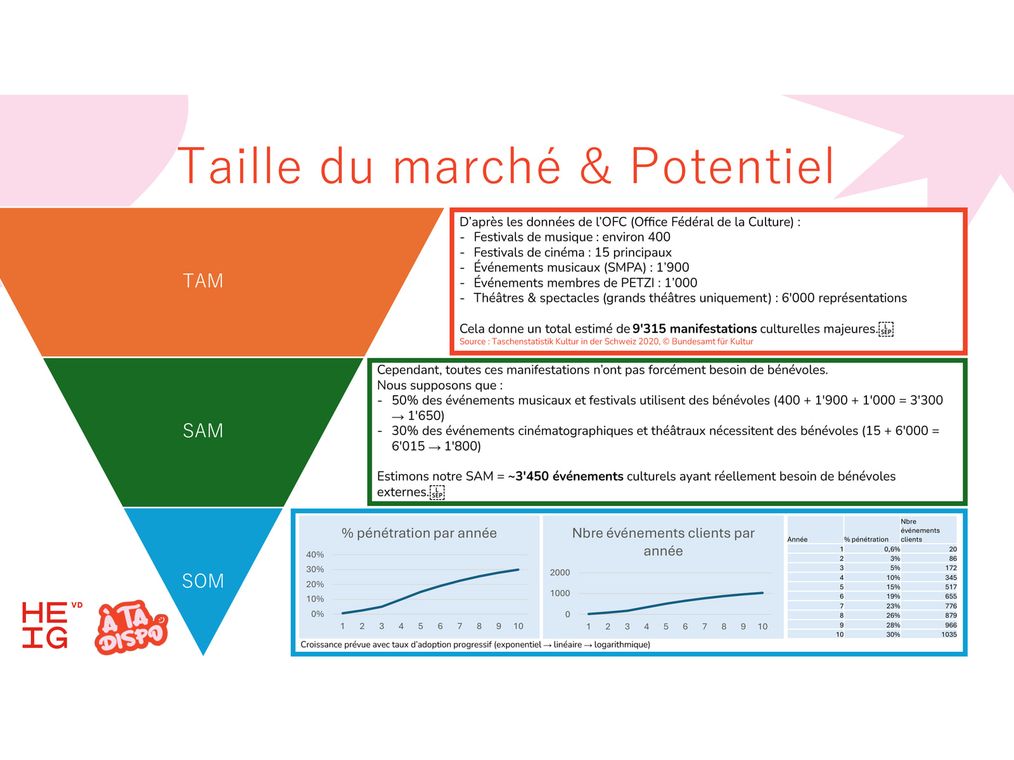
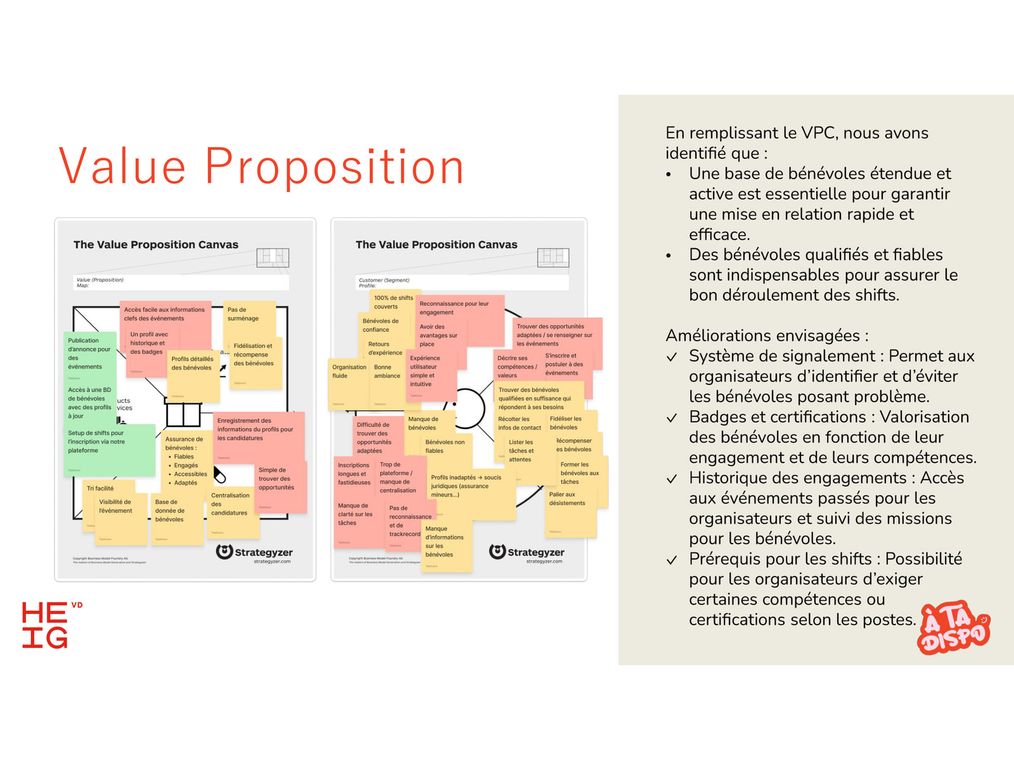
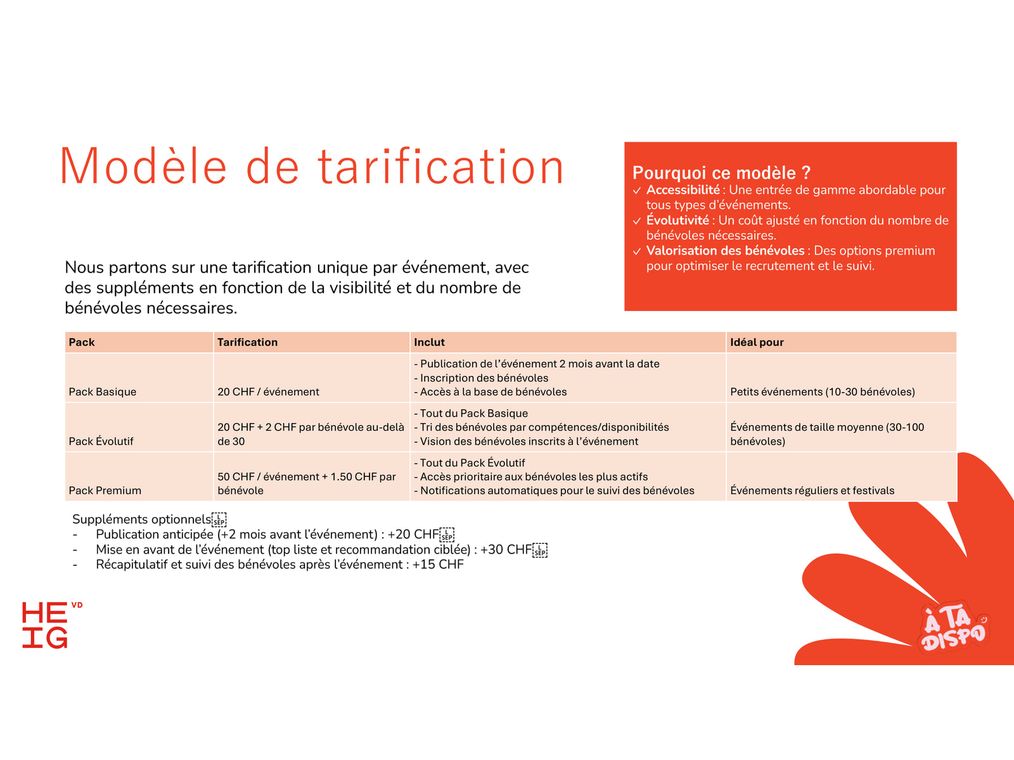
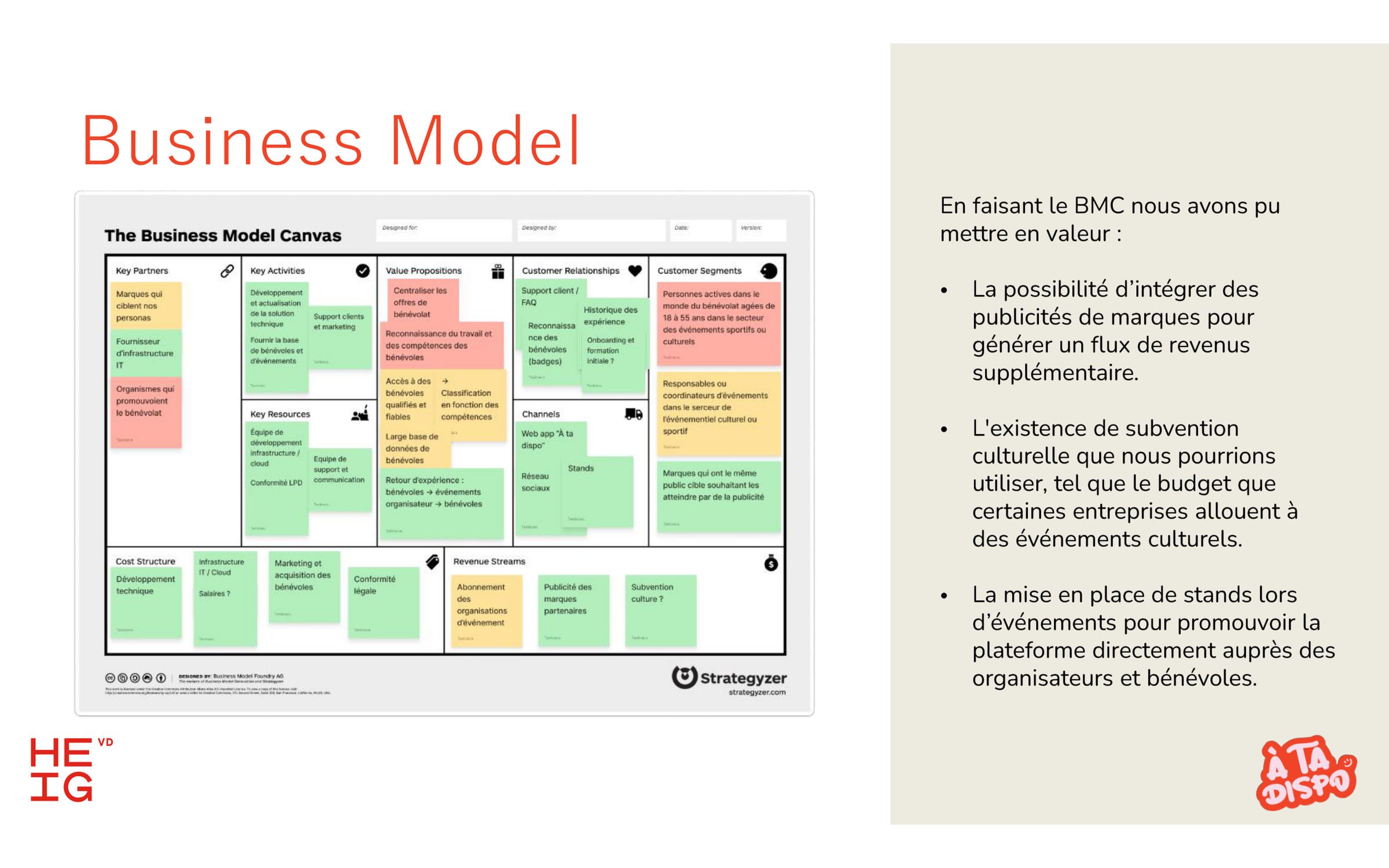
Because this was an entrepreneurship project, the concept had to stand up as a business, not just a nice idea. We ran a competitive study (mapping direct and indirect rivals and where we could actually win), built a value proposition canvas around the volunteer's real jobs and pains, and worked the business model out in a canvas, with customer segments from associations and NGOs to cultural institutions, then a full business plan with financials.
That is the part design school usually skips, and it changed how I think. A concept is only as good as the model that can carry it, and putting numbers and a market against an idea is its own kind of honesty test.
Two courses, two passes
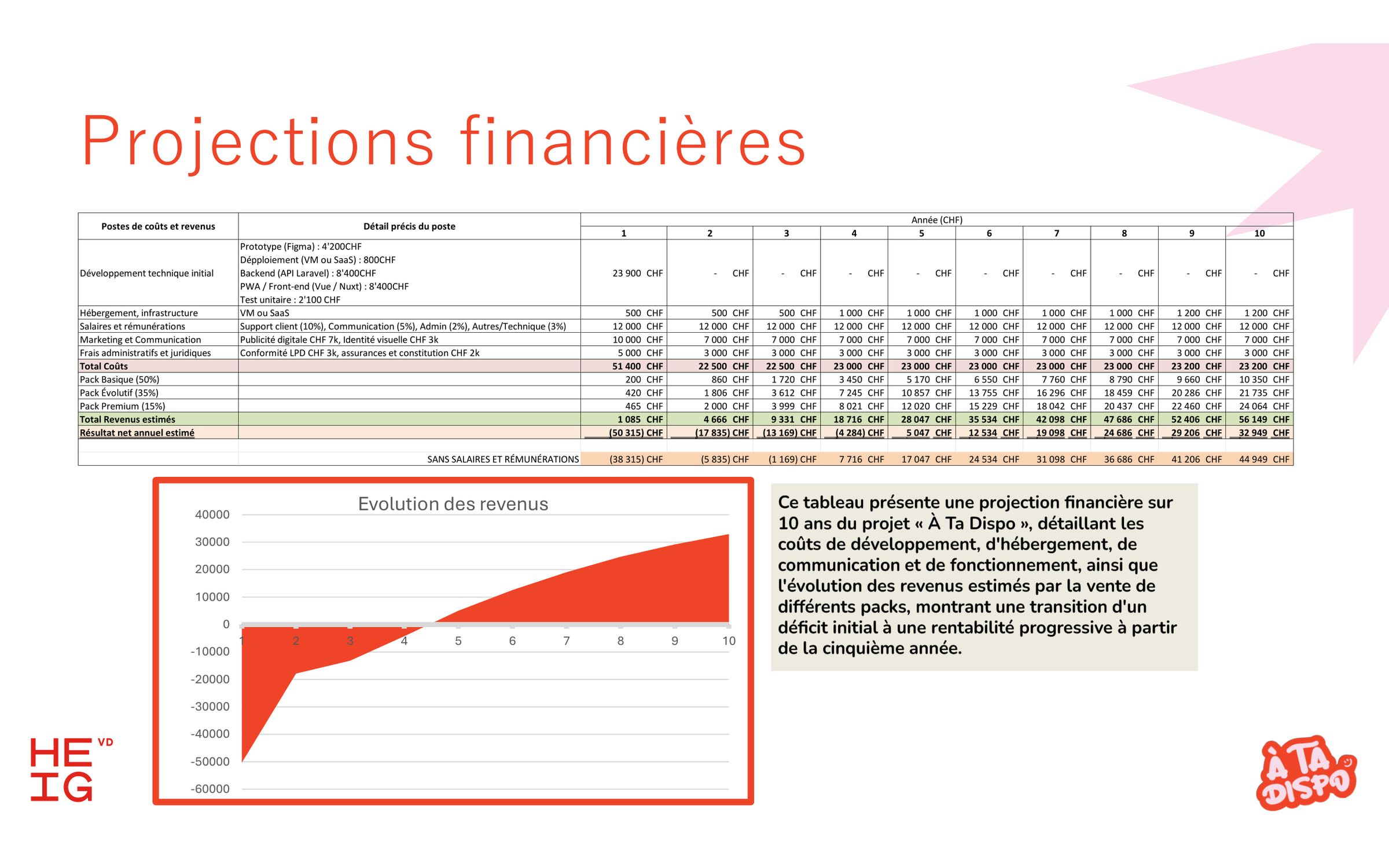
The project ran twice. The first pass, across the Startup and Business Plan courses, built the concept, the research, and the plan. The second, in the Crunch entrepreneurship course, reworked it with sharper finances and a bank-financing simulation, treating À ta Dispo as a venture an investor might actually back.
Coming back to the same idea with more rigour is what made it feel real rather than academic. The second pass was less about a new feature and more about whether the thing could stand on its own two feet.
A validated startup concept with research, a competitive study, a value proposition, and a full business plan behind it, focused on matchmaking and recognition rather than management.
A complete entrepreneurial package, business plan, financials, and pitch, refined across two courses from a first concept into a financeable venture.
A genuinely cross-disciplinary project: the part of my training where design thinking met market research, business modeling, and finance.
À ta Dispo is the project where I learned that a good idea is not enough. Having run a festival committee, I knew the volunteer problem in my bones, but turning that into something defensible meant market studies, a business model, and finances, the parts a designer is tempted to wave away. I came out of it convinced that the strongest design work sits inside a real understanding of viability, and that the discipline of asking whether something can actually work is not the enemy of a good concept, it is what protects it.